Brief Summary
Quicksilver has a solution for boaters whose old family-favorite boats are in need of new engines. Rather than try to fix an old engine, only to have it fail again as older components reach the end of their service life, boaters should think about repowering their boat with a new engine.
Key Features
Specifications
| Type of Engine | |
|---|---|
| Number of Cylinders | |
| Horse Power | 1 |
| Configuration | |
| Weight | |
| Fuel Type | |
| Fuel Delivery | |
| Shaft Length Options | |
| Shift Throttle Control | |
| Displacement | |
| Steering Control | |
| Recommended Fuel | |
| Alternator Output | |
| CARB Rating | |
| Engine Monitoring System |
Captain's Report
Contents of Report
- Remanufactured Versions No Longer Available
- Why Not Repower with the Latest Engines?
- Quicksilver Repower Engines
- Additional Features
- Warranty
- The New Complete Repower Engines from Quicksilver
- Quicksilver 3.0 Liter Engine
- Quicksilver Small-Block V-8 (350 and 383)
- 496 V-8
- Observations
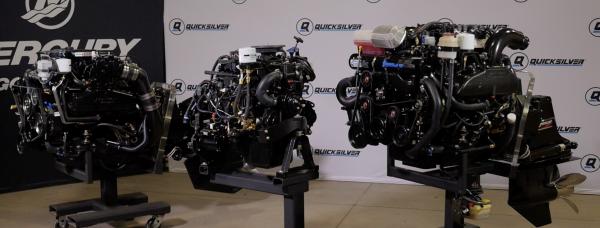
Quicksilver offers repowers with the 3.0-liter engine, a small-block V-8 that is available as either the 350 MPI or the 383 MPI, and the 496 V-8. Owners of older boats will appreciate this line, because these engines match the dimensions of the existing engines.
Since the manufacturers have largely moved on from these designs, and now create engines equipped with catalytic converters, the resulting current-generation engines may not fit in the engine boxes on many older boats. That’s where these Quicksilver repower engines come in, since they fit in the same three-dimensional space as the original engine.
The new Quicksilver legacy engines are actually much better than the engines they replace. They’re chock full of improvements thanks to the technological evolution that’s come along in the interceding years. No need to reconstruct the engine space or raise the height of the engine box to fit them in.
New legacy engines are only available from Quicksilver.
Older boats have their advantages, and keeping them in the family, to pass down, is the only way many people will be able to afford a boat in the future. Unfortunately, the family boat and investment can become worthless with a catastrophic engine failure.
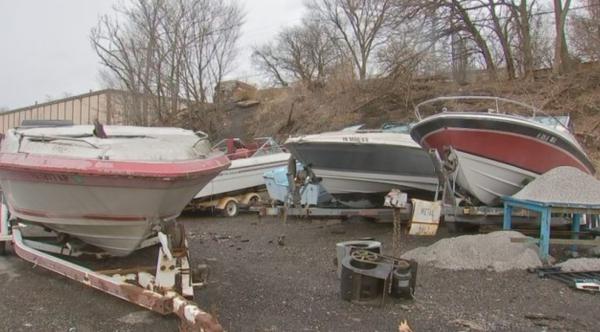
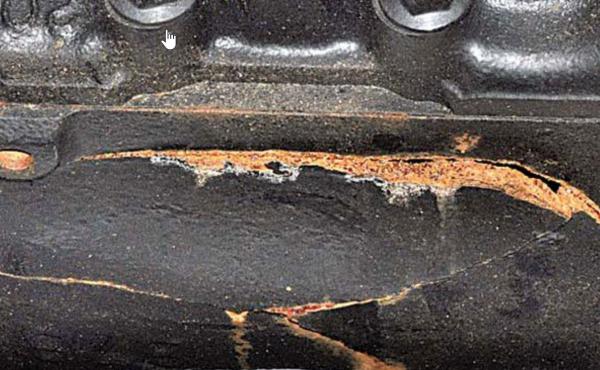
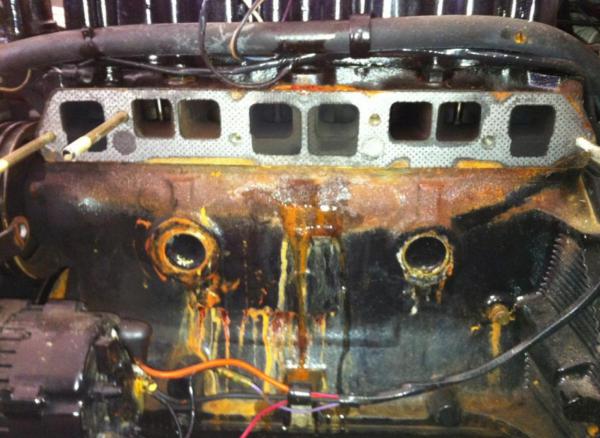
Engine failures can be caused by freeze damage or otherwise cracked blocks, overheating, warped heads, severe corrosion, neglect, and just plain old age. It’s pretty obvious what happens to boats when engines can’t be fixed and are not replaced. While the fiberglass will last forever, the engines – no matter what the brand – will not.

Remanufactured Versions No Longer Available
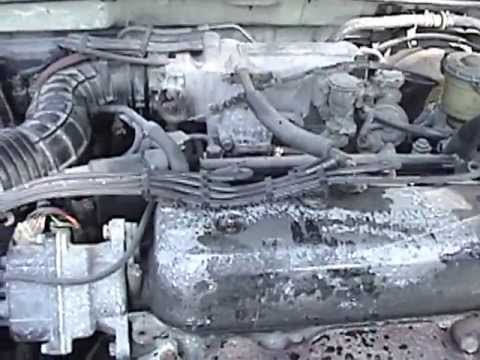
And for those interested exploring all of the repower options out there, we have some bad news – even remanufactured versions of these engines are no longer available. The supply of cores – old engines removed from boats that would be reconditioned and remanufactured – has dried up. These engines – the 3.0-liter, small-block V-8s such as the 350 and 383, and 8.1-liter GM engines were used in both sterndrive and inboard applications – are now ancient history.

That means that hundreds of thousands of boats that are powered by those old engines risk becoming worthless if their engines have catastrophic failures, lose power, or deteriorate over time. These engines include models built by Volvo Penta, Mercury, Crusader, Marine Power, Flagship, Indmar, PCM, and others.
Why Not Repower with the Latest Engines?
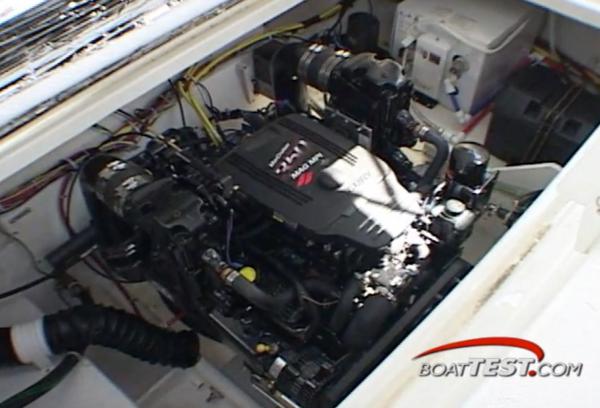
If the old engines are not available, boaters may ask, why not just repower with new engines currently on the market? After all, the technology of engines has improved substantially over the years and decades since the original engines were installed in that old boat. Well, sometimes it’s not that simple. Older boats have engine boxes designed around the older engines.
New engines are much larger, and, often substantially taller, since the exhaust systems now incorporate bulky catalytic converters. So the latest engines may require a complete reconstruction of the aft sections of a boat, adding even more cost to an already expensive current-design new engine, because new engines may need new mounts, a different location of through-hulls and other unforeseen details.
Quicksilver Repower Engines
Now the good news. Quicksilver, a division of Mercury Marine, is building those old engine designs again. The company is building brand-new engines from scratch – from the block on out. Since there have been so many advancements in technology over the last 30 years, and Quicksilver has had the benefit of 30 years to study the failures of the old designs – the new ones they are making are much better than the ones they are replacing. It’s literally taking 20-20 hindsight and turning it around to see into the future.
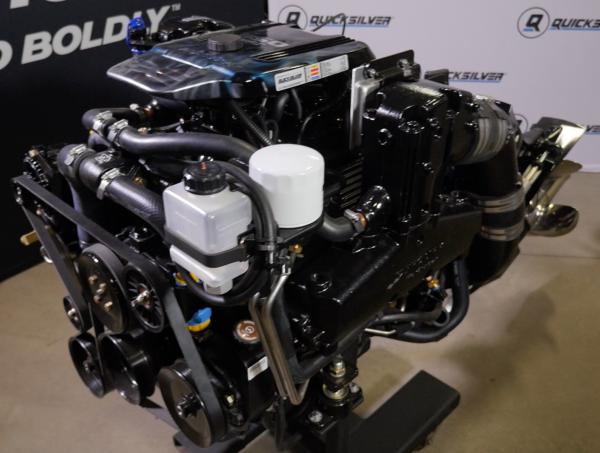
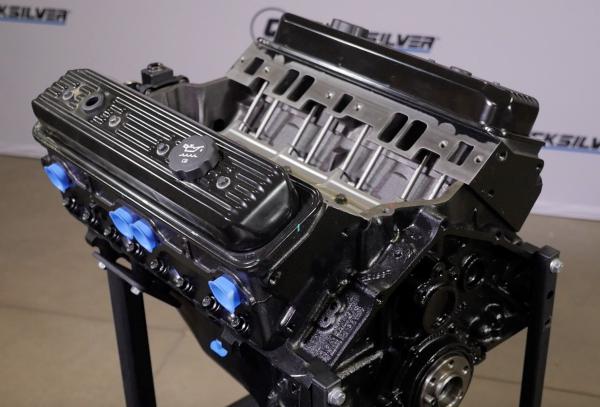
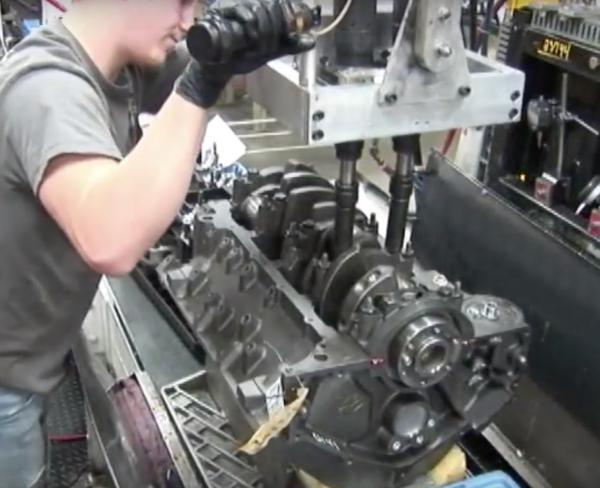
It All Starts with the Block. Quicksilver has been able to make them stronger where the old units failed. The small block that was supplied by GM was actually a Siamese block with two castings forged together to make one 5.7-liter block. Now, Quicksilver makes the 5.7 L block in one casting for increased durability with reduced hot spots thanks to more complete water jacketing.
Additional Features
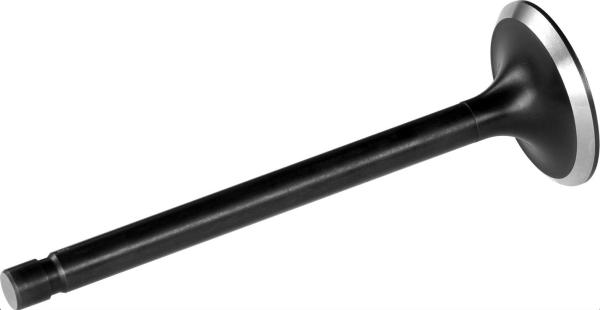
The folks at Quicksilver tell us that their cylinder heads are now the most durable on the planet. Black X Valves have black plasma nitrate hardened valve facings, and there are hardened chromium-cobalt valve seats.
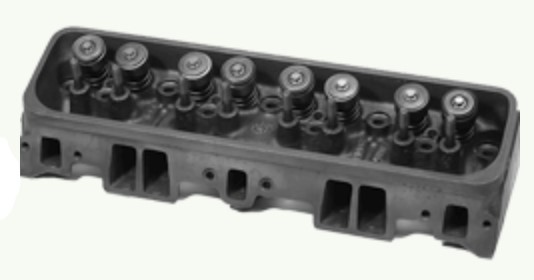
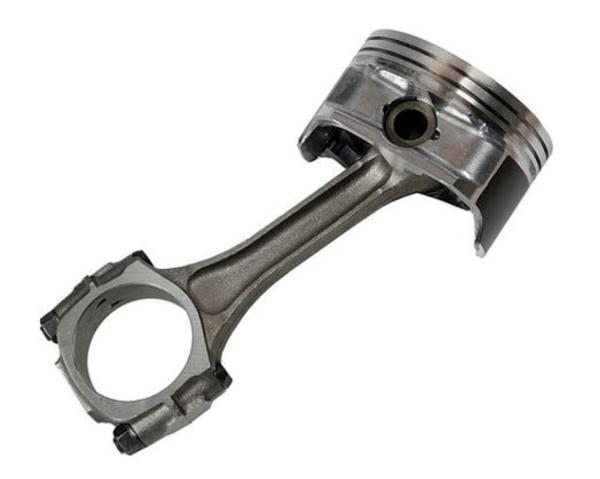
These engines use screw-in valve rocker studs even on the 3.0-liter engine. The company employs hypereutectic pistons, which can take higher temperatures and not expand. The injectors have been improved and the combustion chambers are better, among many other advances, according to Quicksilver.
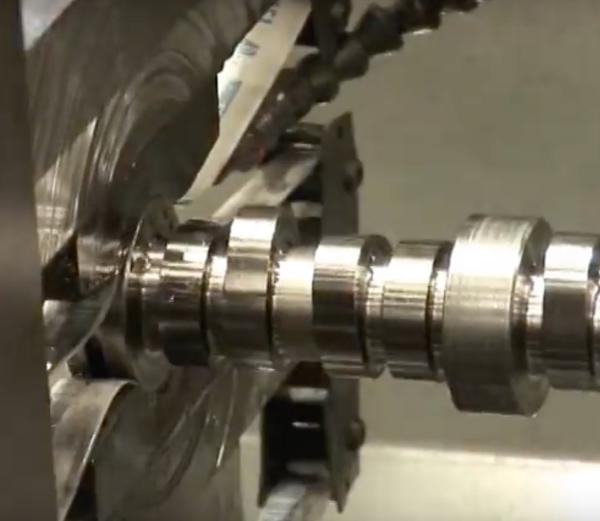
The crankshaft of the 8.1-liter engine is forged steel and manufactured to tolerances not seen in the auto industry. The cams are hardened before grinding, a time-consuming and expensive process that, again, is something that auto manufacturers don’t do. Rod tolerances are tighter than those seen in race engines, we’re told. All of these improvements increase either engine durability or the performance of Quicksilver engines, and all of these engines are better than the original ones produced from 1985 to 2010.


Warranty
All Quicksilver complete engines have a 3-year warranty.
The New Complete Repower Engines from Quicksilver
Available engines include the 3.0-liter, the small block V-8s including the 350 and 383, and the 8.1-liter engines. These are the engines built by Mercury, Volvo Penta, Crusader, Indmar, and many others, that powered the vast majority of inboard and sterndrive boats for generations.
Quicksilver 3.0 Liter Engine
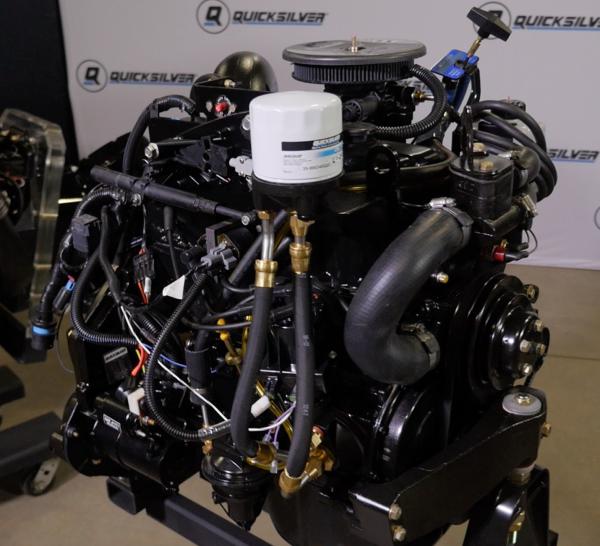
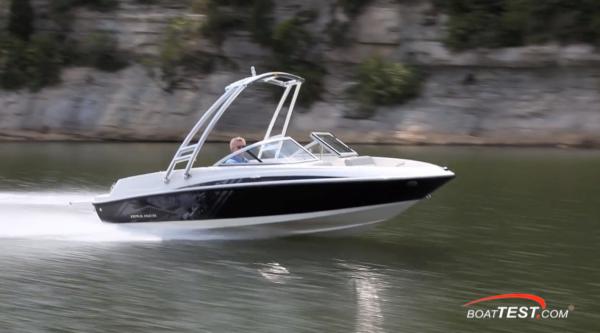
The 3-liter engine has been around for decades, powering entry-level sportboats, and there are hundreds of thousands of them on the water today. The major engine brands stopped making them years ago, and today even used engines are hard to find. Now, with the new Quicksilver 3.0 L engine – which is much better than original equipment – a family can keep a boat running for years to come and protect its investment in Old Betsy.

Quicksilver Small-Block V-8 (350 and 383)
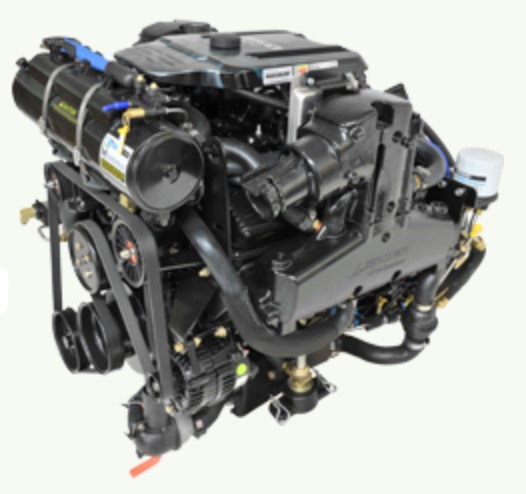
Quicksilver also builds the small block V-8 in two different varieties, the 350 fuel-injected or MPI and the 383 MPI, available in both Bravo and Alpha sterndrive configurations. The company also builds fully close-cooled units for inboard yachts, typically twin-engine cruisers, and also a version for tow boats. This engine’s block is now built from a single casting and it has all of the new technology features plus an improved fuel injector.

496 V-8
Also available is the 8.1-liter 496 big block, a heavy-duty V-8 with an impressive 500 foot-pounds of torque. Available as an HO or a base model, the 496 has standard freshwater cooling, in addition to the other attributes mentioned. The classic 8.1 engine saw quite a few inboard installations as well as popular sterndrive configurations, including high-performance boats in both single and twin configurations.
Consumer Caveat: Some boaters buy automobile engines for marine repower because they are cheaper. Our advice is don’t even consider it. Auto engines are not run at high RPMs for prolonged periods of time, nor do they reach the high temperatures under which marine engines work. They are not made for the harsh marine environment and failure is almost ensured, it is just a matter of when and where.


Observations
When rebuilding an existing engine in a boat, it often seems to be those unplanned on surprises and hidden costs that turn a project from a labor of love into costly ordeal. We refer to parts that don’t pass inspection once the tear-down begins, surprising levels of corrosion in an exhaust or an intake manifold, for example, or a starter or raw-water pump that goes shortly after the project is completed. For that reason, a completely new legacy engine is a safe solution sure to work. And while repowering even with a new legacy engine isn’t exactly plug and play, for repowering, it is the closest thing to it.
When it comes to a new legacy engine, Quicksilver is the only game in town. They are warrantied for 3 years.
Repowering is all about preserving the investment made in a boat that has provided years of family enjoyment. When compared to the cost of buying a completely new boat, repowering for most people is the sensible thing to do. At the same time, it will both raise the value of the old boat and make it quicker to sell on the used boat market.