Finally, U.S. Gets Tough on Pirates
The United States, Britain, Japan, Cyprus and Singapore signed onto an international plan last week in New York to fight piracy off the coast of Somalia. The U.S. government says it is "committed to playing a leadership role" in protecting one of the world's busiest shipping routes. (Glad we weren’t holding our breath waiting for the U.S. to get some "commitment to leadership.") Where is France, Germany, Russia, China, India and the others? This is an issue that all mariners must stand together on because today pirates attack tankers, tomorrow it could be recreational motoryachts.
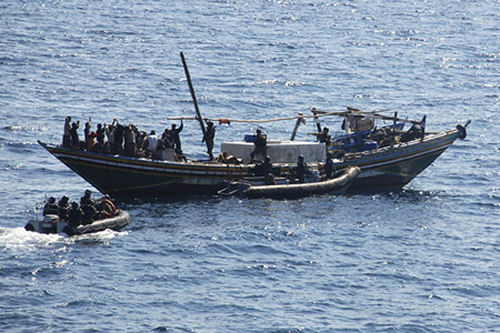 Eighteen months after Pirates took a French cruise ship and over 9 months after a U.S. merchant ship was taken, the U.S. has acted. |
From world-wide News Services--
The move came as the US government warned mariners on Tuesday to expect an increase in piracy off the Horn of Africa and in the Indian Ocean due to the end of the monsoon season and counseled seamen to be prepared to defend their vessels against maritime hijackers.
The so-called 'New York Declaration' - signed on Wednesday by US Deputy Ambassador Rosemary DiCarlo and her counterparts from Britain, Cyprus, Japan and Singapore - is an attempt to pool resources and agree on the best ways of deterring the Somali pirates who prey on vessels sailing between Europe and Asia.
'We realize that the fight against piracy in the Horn of Africa region cannot be solved entirely at sea,' Ms DiCarlo said.
Where to Hang ‘em?
Other needed measures, she said, involve nations adopting legal mechanisms to prosecute suspected pirates and Somalia improving its capacity to police its own territory. A spokesman for Singapore’s Ministry of Foreign Affairs told The Straits Times that signing the declaration was part of Singapore’s ‘strong commitment – as both a responsible maritime nation and a major ship registry – to the international community’s efforts to combat piracy’.
Though it is a non-binding political document, proponents say it will commit ship registry nations to adopt ‘best management practices’ for ship security such as increased lookouts, raised ladders and emergency fire pumps readied to repel boarders.
It was first proposed in May by Panama, the Bahamas, Liberia and the Marshall Islands, four of the world’s biggest ship registries. Those nations signed the declaration previously.
In Washington, Mr Andrew Shapiro, US Assistant Secretary of State for political-military affairs, told the ComDef 2009 defence policy conference on Wednesday that the document represents what Secretary of State Hillary Clinton has called ‘a 21st century solution to the 17th century problem’ of piracy.
By signing, the US says the Coast Guard and US shipping companies will continue adopting measures that comply with the International Ship and Port Facility Security Code to protect themselves against piracy.
Sec. Clinton Speaks
In Washington, Andrew Shapiro, the assistant secretary of state for political-military affairs, told the ComDef 2009 defense policy conference on Wednesday that the document represents what Secretary of State Hillary Rodham Clinton has called "a 21st century solution to the 17th century problem" of piracy.
By signing, the United States says the Coast Guard and U.S. shipping companies will continue adopting measures to protect themselves against piracy that comply with the International Ship and Port Facility Security Code.
A Hard Decision for Some
A group of almost 40 nations and international organizations including the U.S., China, Britain and France gathered last Thursday at U.N. headquarters in New York for their fourth major session on deterring Somali piracy.
They met to discuss how best to coordinate international naval patrols and other security measures and how to discourage the secretive payments to pirates who often demand — and receive — multimillion dollar ransoms.
Another item drawing attention is cooperation on interdiction and prosecution of suspected pirates. Somalia's lawless coastline and 18-year civil war makes it a haven for pirates. Sailors typically are released from their captured vessels only after payment of a ransom. Somali pirates captured more than 100 ships last year, and attacks have increased this year.