The Anatomy of a Successful Rescue
Last week at 9:30 am one morning a 1987 24’ Godfrey pontoon boat with four men aboard was powering across Moosehead Lake, Maine, in “4’ to 5’ swells” when one of the toons “could have been torn open,” according to the owner/operator, and began filling with water. One of the passengers, Nathaniel Bates, called 911 on his cell phone asking for help. Shelly Humphrey, the Orono Maine State Police “barracks” dispatcher, answered the 911 phone, took down the information, and called the Piscataquis County Sheriff’s Department. Someone in the Sheriff’s Department, in turn, took down the information and called the Department of Inland Fisheries and Wildlife.

Sgt. Bill Chandler who was the local game warden recieved the call. This was good call, so to speak, because Sgt. Chandler knew just who to call next.
Sgt. Chandler knew that the closet person to the stricken vessel was Mark Gilbert who owns the Moosehead Marina, which was not far away. (Gilbert is the local Sea Ray dealer and has been in the marine business for over 30 years.) Sgt. Chandler asked Gilbert if we wouldn’t mind dropping everything and go rescue the four men who were by this time perched on the one floating pontoon like crows on a phone line.
|
|
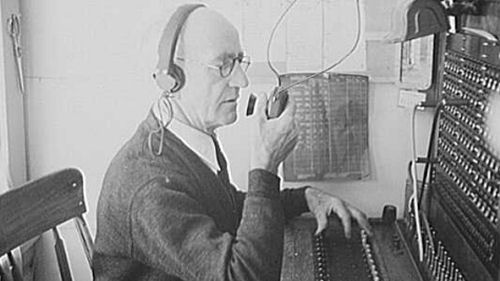
The key to timely rescue is knowing the right person to call – and knowing their phone number. |
Moosehead Lake is one of the largest lakes in Maine and is located about halfway between Bangor and the Canadian border. The four men in the pontoon boat were on their way to work on a camp on Pine Island in the middle of the lake when the accident occurred.
Help is Coming!
Gilbert and a trusty employee, Josh Gile, ran down the Moosehead Marina dock, jumped into a boat and went roaring out into Moosehead Lake to the rescue. Thankfully, 911 barracks state police dispatcher Humphrey kept checking in with Bates. However her contact with boater Bates kept being interrupted with other 911 calls about a homicide in Newport and tracking down the murderer who was on the lamb.
When she got word from game warden Sgt. Bill Chandler that Moosehead Marina owner Mark Gilbert was on his way to the rescue, she passed this information on to boater Bates and asked if he could see Gilbert’s boat yet.
|
|
Local authorities are the ones most likely to know who can effect a rescue in the shortest amount of time. |
Wrong Way Gilbert
Rescuee Bates could see Gilbert’s boat, but the only problem was that it was going the wrong way. Bates told Humphrey Gilbert was going the wrong way. 911 dispatcher Humphrey needed to call Gilbert, but the trouble was she didn’t have his cell phone number.
Humphrey called the Piscataquis County Sheriff’s Department and asked if anyone there could discover Moosehead Marina owner Mark Gilbert’s cell phone number. Indeed, it could be obtained, it was given to Humphrey, and she promptly rung him up. Thankfully cell service on Moosehead Lake, Maine is much better than it is in most places in the U.S. and she was able to be connected to the Moosehead Lake marina owner. She told him to go the other way.
|
|
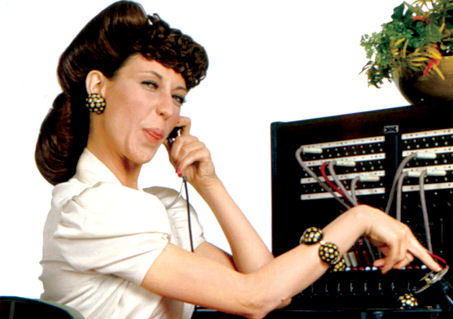
The 911 dispatcher is the critical lynch-pin who coordinates emergency search and rescue and medical assistance. Their quick thinking and good judgment is often vital in a successful rescue. |
Dispatcher Humphrey said, “I had him on one ear and I had Nathaniel [boater  on the other ear, and Nathaniel is going, ‘Tell him to go right, tell him to go straight, tell him to do this.’” Finally, Gilbert and employee Gile reached the partially submerged pontoon boat and rescued the four hapless passengers, who were all sitting on the floating pontoon with their lower legs in the water. One man had fallen in the water and was all wet.
Soon thereafter Sgt. Chandler and Warden Troy Dauphinee arrived on the scene in the Moosehead Lake rescue boat. As we said, it is a big lake.
Swim to Shore? Get Wet?
The question begs, how far was the stricken vessel from shore? The answer seems to be about 30 feet. Stuart J. Orff, 50, the owner/operator of the stricken pontoon boat said, “At one time I could have jumped into the water and probably swam to shore within 30 feet…”

|
|
Pontoon boats are useful for more than just having fun. They can do a variety of chores, including ferrying work crews to job sites, as owner/operator was doing with his old pontoon boat. |
Indeed, Orff discussed swimming to shore with 911 dispatcher Humphrey, but she advised against it because there was only one PFD for the four men. The boat had plenty of PFDs, Orff said, but unfortunately the others were underwater, and evidently no one wanted to get wet diving down to retrieve them. “…we figured it would be safer to stay on the boat,” Orff said.
Post Accident De-Briefing
Local Rockwood, Maine firefighters assembled at the nearby Rockwood landing to administer any emergency CPR or first aid that might be needed and the Charles A. Dean Memorial Hospital ambulance soon after arrived and personnel were standing by at the Rockwood landing when the men disembarked from the rescue boat.
After the four men got ashore they were “warmed” before they returned to their homes and loved ones. Orff said he was going to retrieve his pontoon boat the following day.
Sgt. Chandler said the lake’s water level had been “drawn down” for the winter exposing boats to ledges in the shallower water.
What was the total elapsed time for this rescue? We are told that it was about 1 hour 10 minutes from beginning to the end, thanks to the quick and proactive thinking of dispatcher Humphrey, Sgt. Chandler and marina owner Gilbert. Good on ya.
----We thank reporter Diana Bowley of the Banger Daily News for her 10-28-09 article which gave us the information for this report.