Why the Titanic Hit A Berg and Sank
There is an old wives tale that postulates that people usually have three times to avoid catastrophic accidents that are entirely man-made. A new revelation reported in England last week, purportedly from the lips of a man on the bridge at the time of the calamity, may add shed some new light on the sinking of the century. We all know that Capt. Smith chose a northerly route that took him through Iceberg Alley instead of a southerly one. And we all know that he was traveling at full speed, but there may be more to the story.
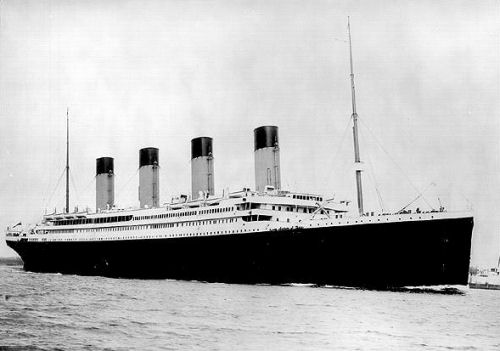 The sumptuous liner sank during its maiden journey on April 15, 1912, bringing death to 1523 of the 2228 passengers and crew members aboard. Only 705 survived. Could the berg have been avoided? |
LONDON (Reuters) – The Titanic hit an iceberg in 1912 because of a basic steering error, and only sank as fast as it did because an official persuaded the captain to continue sailing, an author said in an interview published on Wednesday.
Louise Patten, a writer and granddaughter of Titanic second officer Charles Lightoller, said the truth about what happened nearly 100 years ago had been hidden for fear of tarnishing the reputation of her grandfather, who later became a war hero.
Lightoller, the most senior officer to have survived the disaster, covered up the error in two inquiries on both sides of the Atlantic because he was worried it would bankrupt the ill-fated liner's owners and put his colleagues out of a job.
"They could easily have avoided the iceberg if it wasn't for the blunder," Patten told the Daily Telegraph.
"Instead of steering Titanic safely round to the left of the iceberg, once it had been spotted dead ahead, the steersman, Robert Hitchins, had panicked and turned it the wrong way."
Patten, who made the revelations to coincide with the publication of her new novel "Good as Gold" into which her account of events are woven, said that the conversion from sail ships to steam meant there were two different steering systems.
Crucially, one system meant turning the wheel one way and the other in completely the opposite direction.
Once the mistake had been made, Patten added, "they only had four minutes to change course and by the time (first officer William) Murdoch spotted Hitchins' mistake and then tried to rectify it, it was too late."
Patten's grandfather was not on watch at the time of the collision, but he was present at a final meeting of the ship's officers before the Titanic went down.
There he heard not only about the fatal mistake but also the fact that J. Bruce Ismay, chairman of Titanic's owner the White Star Line persuaded the captain to continue sailing, sinking the ship hours faster than would otherwise have happened.
"If Titanic had stood still, she would have survived at least until the rescue ship came and no one need have died," Patten said.
The RMS Titanic was the world's biggest passenger liner when it left Southampton, England, for New York on its maiden voyage on April 10, 1912. Four days into the trip, the ship hit an iceberg and sank, taking more than 1,500 passengers with it.
(Reporting by Mike Collett-White, editing by Paul Casciato)