Boat Buying: How to Find Long Term Value
A new trend in boat buying is "long term value". More and more people these days are looking at a boat purchase as an investment. Gone are the days when a new boat would be bought with plans to move up in a couple of years to a bigger boat. Now buyers are more carefully considering their purchase and are planning on holding on to their boat for more years than before, maybe even passing it on to their children. With money harder to come by for many people, its value and the value of the boat it can buy takes on a new worth. As a result, now more than ever it is important to get boat selection right.
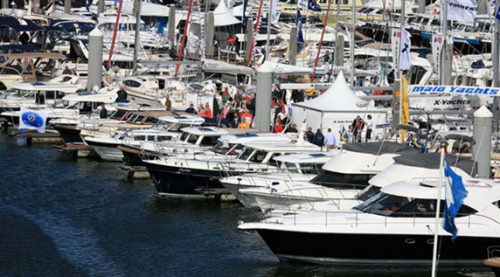 People are looking at boats differently these days. For many they are an asset like a summer cottage and something to be held onto for a long time. |
What Do We Mean By “Value”?
We don’t mean the lowest-priced boat on the market because sometimes their value is very limited, nor do we mean the most expensive boat on the market, because some expensive boats are over-priced for what you get.
Rather, we are talking about finding a boat that will fit one’s needs as closely as possible, will be functional for many years to come and when the owner goes to sell it, will have depreciated LESS than the average boat in its class. There is more that goes into “long term value” than just price.
Finding “Enduring Value” is Difficult
Boats are not a commodity. They are also complex and often the most important factors are not apparent. That’s what makes finding good, long term value difficult. It is the reason why BoatTEST.com was started eleven years ago – to help you sort out good value from the fluff, the solid, classic performers from the flavor-of-the-month, and the outstanding from the mundane.
Determine "Type" and "Class"
To find value in boats, as in most things in life, you must compare them. When doing this, be sure that you are comparing boats in the same “type” and “class.” For example, if you compare an outboard boat with a sterndrive you are not comparing boats in the same “type.” Decide first, which type boat you want, outboard or sterndrive, motoryacht or express cruiser, sedan or convertible. If you don’t know what type of boat would best serve you, step back, and ask to what specifically you will be doing with your boat.
Then decide what “class” of boat you want to buy within that type. For example, an expensive 48’ Hinckley express is not in the same class as is a relatively inexpensive 34’ Mainship. Size, level of quality or functionality, and price will define “class.”
Once you have determined the type and class of boat you want, it is time to compare these important details. We suggest you do it on a yellow pad, making different columns for each boat.
1. Size of the Boat. Start by comparing LOA (length overall), but quickly look at beam and displacement (weight). It used to be that most builders used the measurement from the boat's stem to its transom as its LOA, but these days builders are all over the place with no one standard used by all, with some counting bow pulpits and swim platforms, and some not.
Virtually no American powerboat builder these days publishes the LWL (length waterline), which along with BWL (beam waterline), draft and displacement are the four most important dimensions.
2. Price per Pound. Always compare displacement of the boats you are considering. Make sure that the engines on all of the boats you are comparing are the same. Then divide the dry weight (not counting the weight of fuel, water, and personal gear) into the price to give a cost of the boat per pound. Obviously each boat has different equipment and different components, nevertheless if you are comparing in class you are getting a rough idea of the relationship of the boats, one to another. If you can’t compare displacements with the same engines, then take the engine weight out before you compare. BoatTEST’s engines spec tables should help you with engine weights.
You might ask since we have already said that boats are not commodities, why we are looking at a price per pound figure. The answer is that all of the boats in “class” should come roughly in the same ballpark. If one is way out of the norm, either high or low, find out why. Sometimes it is because the builder has added in the weight of the engines and trailer, for example.
In some cases, we might discover that the quality of the materials, hardware, fixtures, standard equipment, quality of joinerwork, or man hours of labor that have gone into the fit and finish is the answer for the anomaly. And sometimes, we simply cannot come up with an explanation for a price per pound anomaly, either higher or lower. When that happens, you must dig deeper.
3. Overall Quality of the Boat. We’re here to tell you that you want a quality boat. You want value, but the “value boat” has to have quality, too, or you may be disappointed a few years later when the upholstery is falling apart, the wring is shorting out, the bilge looks grungy and you realize that the style of the boat is really out of date.
4. Warranty Is Important. Do not take warranties for granted. They are not all the same. Further, do not assume that the warranty that you saw on a boat six months ago is the same one it has now. Read the fine print. Find out what it doesn’t cover.
While we all dream that our boats will be like a trouble-free Lexus, all too often that is not the reality. When you compare boats, line up their warranties: engine and drive train, hull and deck, upholstery and deck fixtures, and all the equipment inside. Pay particularly attention to any warranty that may cover the gel coat.
Do all engine makers and boat builders approach warranty issues with an open mind and alacrity? The answer, sadly, is no. Some engine companies are notorious for sticking to the letter of the warranty, while others are more into the spirit of the contract or the spirit of making a customer for life by bending their rules in his favor. Some boat builders expect owners to return after a few months with a punch list of items to be fixed and others do not seem to.
You need to closely quiz the dealer as to his response in different hypothetical warranty situations. If you don’t have confidence in the dealer to make good on warranty issues, go elsewhere. If you are buying a boat from an importer, make sure you know who is going to pay for warranty work, in all likelihood it will be the dealer/importer unless you have a document to the contrary.
5. Customer Service. The level of customer service in the boat industry has risen mightily in the last 10 years. You must look to your dealer for the service. It is his responsibility. If you buy a boat brand that has a good reputation from a dealer that does not have a good reputation, you might have a problem.
Read BoatTEST.com “Owner Reports” about the brands you are considering. Ask along the dock. Most important -- when you do buy a boat, get your dealer to make a commitment to you for customer service.
6. Equipment, Utility and Amenities. Every builder is trying to make his boat attractive to the buyer. Some will play the low-price card, others will pack a boat with equipment as standard that is usually found on the option list, still others will offer greater utility, some will load it up with gimcracks, and others will appeal to your sense of style and aesthetics.
Quantify the expensive items of equipment and put a dollar amount to it. If you don’t know the value, simply Google it. If the boat you are looking at is under-equipped compared to others in class, but the same price, ask the dealer to justify the difference. He may have a very good answer.
“Utility” is harder to compare, but it is very important. Obviously, if you can do more things with one boat than with another, it has more utility and provides more value. Beam often comes into play here. Some builders have a boat that is as long as its competition and is priced about the same, but has a foot less on the beam. This boat won’t have as much room inside (read: “utility”) that the beamier boat will have.
In small boats, does the helm seat fit your body? Is there enough room for your whole family? “No” answers to questions like these indicate a lack of utility for you.
7. Performance, Including Fuel Economy and Range. A boat that is under-powered is not a good value, not even if the dealer tells you it is. The #2 complaint we get about small boats (after the helm seat) is that the boat bought was “under-powered.” Being under-powered means a different thing for different boats. Check BoatTEST.com performance tests before buying. Note that most of the tests are with 2 people aboard and usually have half fuel or less.
Ask yourself what your boat’s mission in life is, then determine what are the most important performance characteristics for that mission: best cruise speed, mpg, range, time to plane, etc. Know what performance numbers you want to achieve. Tell that to the dealer and ask him to make a recommendation that will make you a happy customer.
8. The Engine and the Engine Brand’s Reputation. After the brand and model of your boat, the most important component is the engine. 40’ cruisers with gas engines sell for less than the same boat with diesels – but it is not necessarily a better value. You must be careful to match the type and horsepower of an engine to the application.
Resale is a constant theme that underlies a lot of issues on your boat. Will such-and-such brand, horsepower or type of engine raise or lower the value of the boat when you go to sell? Certain brand names have different reputations in different parts of the country. Make sure you are in tune with any local proclivities. Transferrable warranties could be important.
The new advancement that have come along the last five years in boat propulsion such as joysticks and pod drives are important considerations when buying. These items of equipment offer greater utility, speed or fuel economy or maybe all three. They are expensive and boaters did without them until just recently. But what will buyers of your used boat want?
9. Quality of the Builder’s Management. Corporate culture is terribly important when it comes to boats – in fact, we think it is the single most important thing driving a successful experience for the owner. A dedicated boat builder (either as owner or a hired president) will be working hard to make sure the boats his/her company builds are everything they can be and that customers are happy.
On the other hand, company presidents who are focused on their annual bonus, selling the company, climbing the corporate ladder, projecting their own ego, playing a lot of golf, or haven’t a clue as to what is going on, exude an attitude that is quickly picked up by the rest of the staff down the hall, and then out on the shop floor. Unfortunately, in many cases that attitude ends up affecting the quality and fit and finish of the boat. The lack of top management involvement can also negatively affect good customer service, warranty policy, and customer satisfaction. It happens all of the time.
10. Boat Brand Reputation.
The recent economic situation is putting a severe strain on some brands’ reputations. In the last 40 years we have never seen a period where brand perceptions are evolving so quickly. You want to own a boat with a good reputation and a brand you can be proud of and that includes affordable boats as well as high price-point boats.
Like the Marines, when the going gets tough the tough get going. These days many companies are rising to the challenge of the times with new products, new approaches to business, and new ways of courting customers. These companies have reputations that are on the rise. Stay alert to these wind shifts, as you want to make sure the brand you buy will still be a solid brand when you go to sell in five years or more.