Sportboat Buying Check Points No. 7: Displacement
Displacement is one of the first things sportboat buyers usually check after length and beam. It is an important metric when deciding which boat to buy, but there is much more to it than meets the eye. And what should a consumer think about the boats that are at the extremes of weight, both on the heavy and the light side?
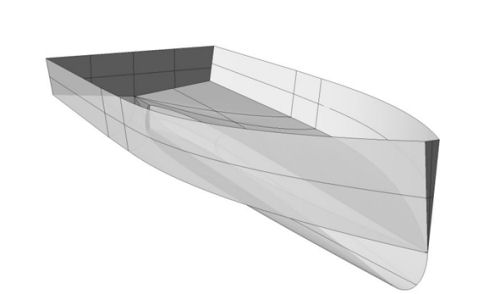 A fully finished sportboat displaces a cubic foot of fresh water for every 62 lbs. it weighs. Displacement is the water displaced by the hole it leaves at rest. The more a boat weighs the more water it must push aside when running. |
Comparing Displacement
When researching sportboats many buyers compare the displacements of the boats they are considering – and they should! However, this exercise can be a misleading indicator of a boat’s strength, stability, durability and value. While it is logical to assume that a heavier boat should cost more because it has more material, boats using high-tech fabrics or construction processes or both will often cost more – and be worth it – even though the finished boat is lighter. Then, there are boats which use high-tech materials and are still heavier.
Today most builders are very weight conscious, knowing that heavier boats are harder to push, requiring more horsepower and more fuel consumption. Whereas once heavy boats were deemed better because, all things being equal, they would ride more comfortably, be stronger and more durable, today, the emphasis has shifted toward building boats with greater strength and reduced weight which will be more fuel efficient and go faster.
Match The “Mission”
By and large most sportboats are used on small inland lakes in good weather. for that reason, to build a boat for be able to jump 4’ waves at 50-mph and hang together could be considered “over-building”. It adds to the initial cost and annual operating expense with no real payback in added utility for many boaters. That is one reason why buyers should match the “mission” of their sportboat with its displacement.
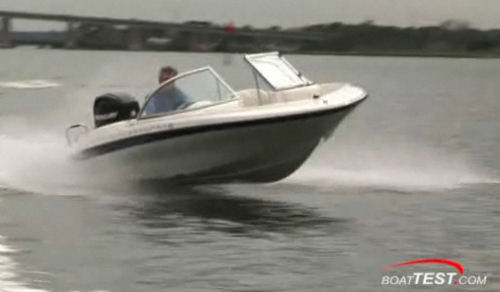
We at BoatTEST.com have gotten very few reports of hull failure in sportboats, or any other type for that matter. Fiberglass is a resilient and durable material and the boating industry has done what we think is an admirable job of building boats with proper scantlings for the work intended. Hull integrity is low on our list of concerns when we test a fiberglass boat of almost any displacement. Usually the boat can take more abuse that the people riding in it.
Know The Construction Process
Few car buyers need worry themselves about how a car is made, but most boats are made in units of tens or hundreds, and most are not assembly-line mass manufactured products like automobiles which are made in the hundreds of thousands per model. It is for that reason buyers need to know how the sportboats they are considering are built.
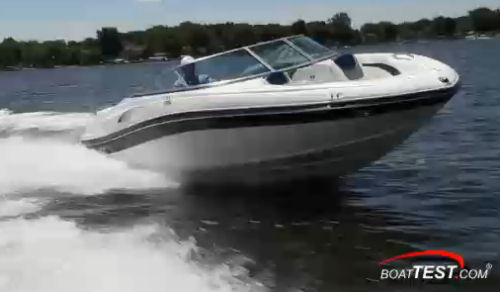 The all-new Rinker Captiva 216 is the penultimate heaviest boat in class and is a solid performer in the mid-price point range of sportboats. See our test… |
Some sportboats are built with expensive tools and robotics and others are built with hand lay-up or chopper guns, pretty much as it has been done for 50 years. Some sportboat builders use exotic fiberglass multi-axle fabrics, Kevlar and even carbon fibers, and others use 24-oz. woven roving and 3-oz. mat that have been the stable of recreational boat construction since the beginning of the fiberglass era. Today, most builders of sportboats use a combination of both modern and traditional materials and techniques to build their boats.
Look For Extremes
Since the engines and drives of sportboats in a class all weigh about the same, the materials, processes, and number of laminated parts used to build the boat you buy will largely determine its weight. As you compare the weight of one boat with another, if a boat stands out from the rest either heavier or lighter, you should find out why.
A boat that is heavier than the rest of the boats in class may have been beefed-up because the builder expects his brand to be driven harder and faster than the average sportboat. Such a builder may have put in more or larger stringers and a extra layer or two of glass to be able to take the added punishment. Other boats that are heavier, may have more molded-in parts which add utility and often better fit-and-finish to the boat.
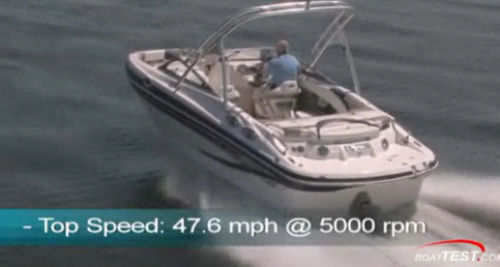
Sportboats at the light extreme in class may have a shorter waterline, less beam, or lower freeboard and a shallower cockpit. They may have fewer fabricated fiberglass internal moldings or lack an internal liner. Purpose-built sportboats that are lighter might be constructed with more exotic materials which are lighter and will cost more, or use less conventional material and cost less. Usually it is the latter.
By finding out what has gone into the boat and how it was built, you will usually be able to figure out why a boat is at an extreme in any sportboat class. All things being equal, a heavier boat will ride more comfortably and be more stable at rest, than will a light boat. The heavier boat will also have a lower WOT speed, and burn more fuel at cruise than will a lighter boat, all things being equal.
You may find that you prefer a building concept at one of the extremes, or you may prefer to buy a boat that is similar in displacement to most others in class.
Compare Displacement in Price-Point Levels
After scanning all of the sportboats available in a particular size range and comparing prices, pick a price point – low, medium or high – and then compare displacements in that class alone for meaningful guidance. In most sizes of sportboat there are definite pricing levels and by comparing boats in the price range that fits your budget and your needs, your research time will be best spent.
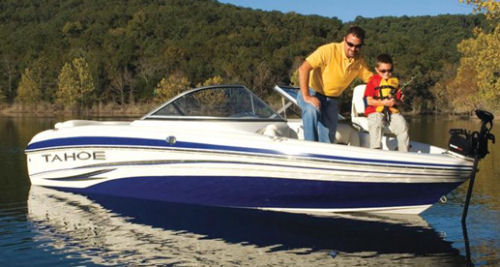
Once in a particular sportboat class, some consumers divide the price of the boat by its dry weight to get a price per pound for comparison purposes. We do not recommend that process simply because sportboats are not a commodity. Buying a boat is not like buying a bunch of grapes or a tank of gas. Who on earth buys an automobile based on its price per pound?
There are many intangible things that go into the cost of a boat which cannot be measured, such as warranty, aftermarket customer service, and the designing and engineering that went into the boat in the first place. Further, some builders lavish man-hours on QC at every step of the process or making sure fit-and-finish is top-notch, while some other builders seem to give some of their boats a lick and a prayer and push it out the door.
By knowing how the boat you buy is built, and by making sure it was built for the mission you intend, you have the best chance of getting the right boat for your purpose and pocketbook.
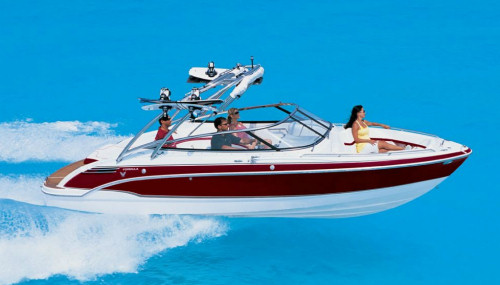 Now to answer the question posed above: That beautiful aquamarine water you see in this publicity picture is in the Bahamas where Formula conducts its photo shoots most years. All of the boats in their line, including the 240, Formula’s smallest, go across the Gulf Stream on their own bottoms for the photo session. Because helicopters, models and marine photographers all charge by the hour and are expensive, time and speed is of the essence. The 240 is 9% heavier than other boats her size because it is built to take offshore punishment. |
Further Information:
BoatTEST.com videos showing the construction process--
Yamaha Sportboat robotic construction process…
Formula hull and deck construction…