Equipment Advice: Choosing the Right Anchor
Choosing the Right Anchor

There are a number of different styles of anchors out there and they all have different strengths and weaknesses and work in different situations and conditions. So, how are you supposed to know which to carry and deploy? Have a look at our run-down of the most popular types, and what they do best.
Bruce (Claw) Anchors –
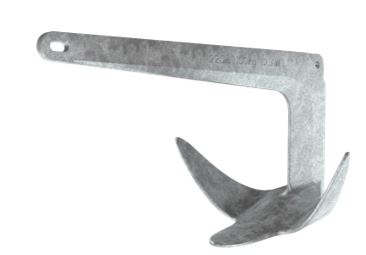
The Bruce, also called the claw, is essentially shaped like a claw with the palm facing upwards. The relatively wide claws of the anchor give it holding power in soft bottom, though not as much as other styles, like the Danforth. It does well on a rocky bottom, but often has issues with hard clay or grass bottoms. It’s considered a good option for long-term anchoring in saltwater because it tends to stay secure through changes in the direction of pull.
Danforths –
A Danforth anchor has two wide flukes that pivot on a shaft called the stock that runs perpendicular to the shank. It is very effective in mud, sand, and other soft bottom types. It is sometimes also called a “fluke anchor”). But on rock and packed shell, a Danforth will tend to skip along without firmly digging in. On wrecks and reefs, they may hold if the pointed flukes grab in a lucky spot, but quite commonly, they hold a little too well – potentially becoming stuck and irretrievable.
Grapnel Anchors –
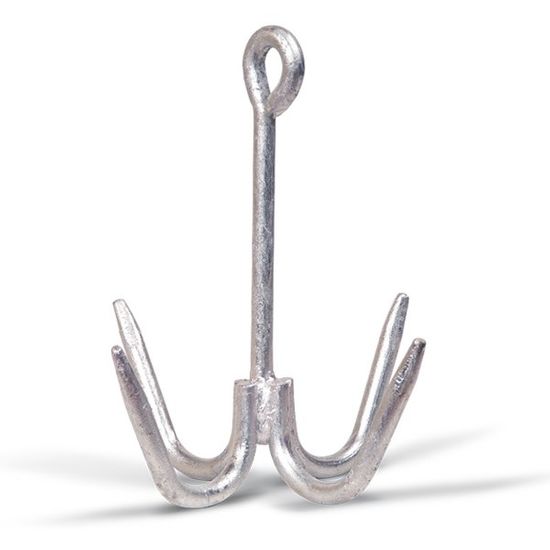
These anchors have multiple arms poking out like a giant treble fishing hook. They have little fluke area so they’re completely ineffective on soft bottoms, but are the best way to snag on hard, jagged rocky bottom, wrecks, or reefs. (Note: They can also damage living reefs and as a result, are banned in certain areas. Check local regulations, before using a grapnel anchor). Many are made of soft metal and designed so the arms will straighten out by applying some extra pressure, so they can be recovered from snaggy situations. Many handy boaters build their own grapnel anchors by welding short lengths of rebar to a pipe, then bending each one of them into a hook shape.
Mushrooms –
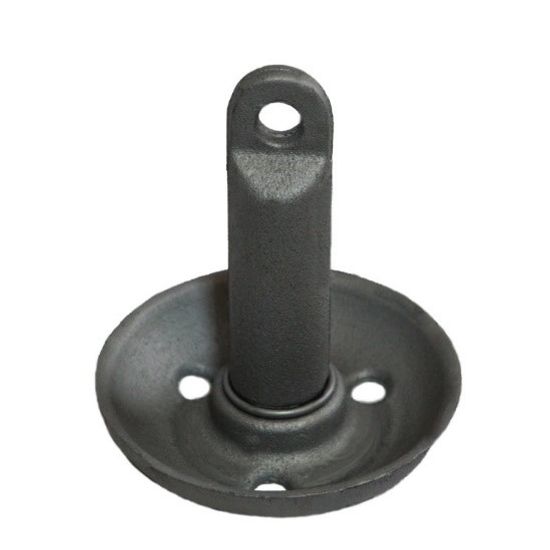
Mushroom anchors depend mostly on their own weight to hold position, so they aren’t usually of much good for boats of any real size. While a 10-pound mushroom works just fine for a jonboat in a lake, the heavyweight sizes needed to hold bigger boats in position in open waters make them impractical. Still, their easy-to-stow nature and the fact that they hold equally well on any bottom type makes them a favorite for pond-hoppers, canoes, and other small boats.
Plow Anchors –
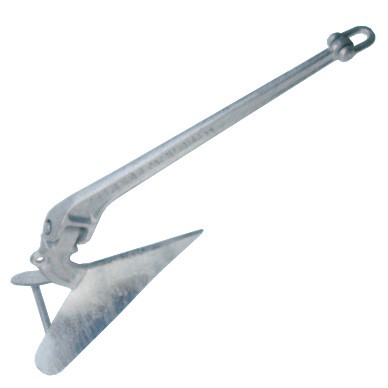
Plow anchors look just like, well, a plow. They have similar characteristics to the Danforth and do best in bottom types that are relatively soft. They aren’t likely to hold on wreck or reef materials and again, if they do, they’ll often become permanent additions to the structure. There are several variations, some with hinged shanks and other features, often differentiated by brand.
For many boaters, in order to anchor solidly on all the different types of bottom they may encounter, carrying two anchors makes sense: one is used for soft bottom and the other for holding tight on structure. And, of course, make sure both anchors are sized properly for the boat. Fortunately, this key detail is usually marked prominently on the anchor itself or is on the label or signage at the store.
Even with the proper type and size of anchor, having the appropriate ground tackle is also a must. Rope alone does not usually do the trick, and having a sufficient length of chain between the rope and the anchor is imperative. Just what is that length? It depends on the size of the boat and the depth of the water in which the boat will anchor. Use at least 10’ (3.05 m) of chain, but consider rigging with enough chain that its length matches the boat’s LOA.
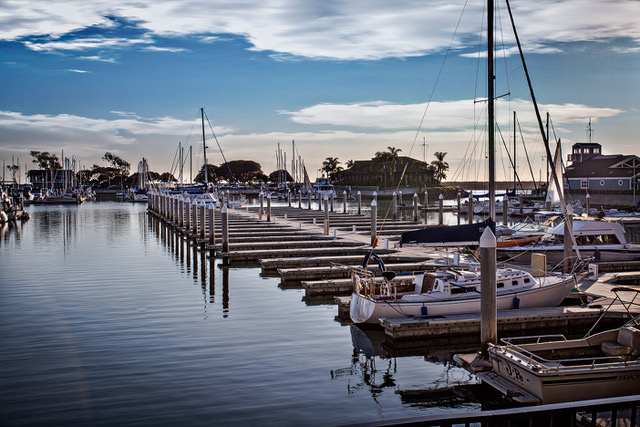
Okay: all the boxes have been checked and all the gear is in good order—what else does a boater need to know to make sure the boat stays put once the anchor drops to the bottom? Start with knowing how much scope (length of anchor line or rode) to let out after the anchor hits bottom. At a bare minimum in calm water, a three-to-one ratio to the water depth is sufficient. If the water is 20’ (6.01 m) deep, for example, any less than 60’ (18.2 m) of line isn’t likely to be enough. If there’s any wind, current, or waves pushing the boat this way and that (and keeping in mind that conditions change after the anchor is set, and the skipper must pay attention to that), a scope of at least five to one is probably going to be the necessary minimum. And in rough conditions a seven-to-one scope is usually minimal. When anchoring in extremely difficult conditions, dropping out every last foot of rode available is generally a good idea — so long as it’s tied to a strong point.
Finally, remember that situational awareness is just as important as anything else. Becoming focused on baiting a hook, tying a knot, or some other activity often distracts otherwise competent captains and as a result, they may not notice that their anchors are dragging or have broken free for quite a while.