Spring Commissioning for Small Boats
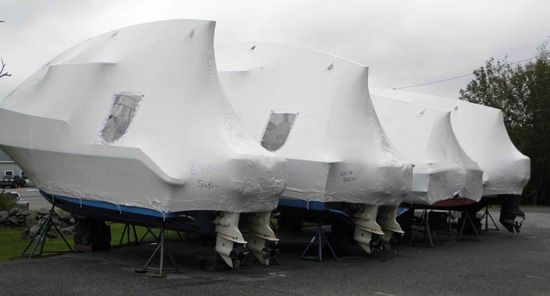
A boating season well begun will mean less downtime when the weather is hot and the season is in full swing. Take the time before the season begins to go through the boat’s systems and equipment prior to the season. And it’s all the more important if boaters do their own maintenance, as many owners of small boats do.
In some corners of the world boaters may have been forced to (shudder) winterize their boats and wrap them up for the season. Ouch. But thank goodness, as winter draws to a close, a new boating season is dawning. Merely stripping off the shrinkwrap, however, isn’t enough to start off the season right. As boaters get their boats ready for spring, they should be sure to check all these boxes:
START WITH A WASHDOWN. Boaters need to blast or scrub away all that grit and grime that accumulated during winter lay-up, in the seams between fiberglass parts, hatch gutters, and bilges. This is about more than just making a boat look good, it’s about longevity and even safety. The detritus that collects in these areas can get washed into the scuppers, and clog the drains. The grit gets underfoot, and scratches gelcoat. It can get sucked into bilge pumps, and destroy the impellers or jam the float switches. The spring washdown is the most important washdown of the year.
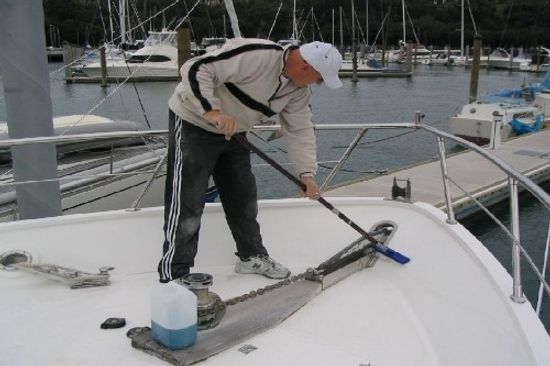
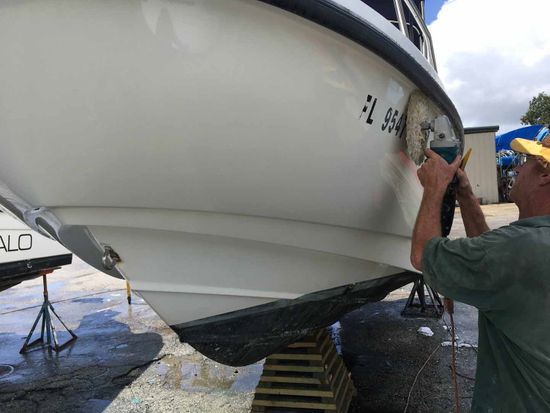
WAX THE HULL AND TOPSIDES. We’re not talking about a quick and easy waxing – leave that liquid or spray wax in the garage, and instead reach for a thick paste wax. The liquid stuff is great for making a boat shine, but it doesn’t do much in the protection department. Paste wax, on the other hand, will create a UV-inhibiting coat that protects a boat’s gel coat and helps prevent oxidation.
DE-WINTERIZE PLUMBING SYSTEMS AND ENGINES. This means flushing out the anti-freeze, running the fogging fluid out of the engine(s), re-opening seacocks and through-hull fittings, and re-charging the marine sanitation device, if the boat has one.
CHECK ALL PLUMBING HOSES. While the boat’s plumbing is front and center, it makes sense to take a few minutes to inspect each and every hose on the boat, particularly where it’s clamped to a barb or fitting. If anything’s going to spring a leak it’s better to find out about it now, instead of after shoving off the dock.
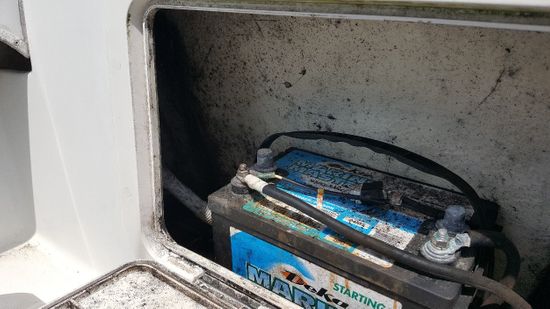
CHARGE THE BATTERIES. Make sure they start the season fully charged, and this is also an ideal time to inspect cables and connections. Look for corrosion, make sure they’re fitted properly, and give them a shot of a protection with a product like 3M Battery Terminal Coat or CRC Battery Terminal Protector. Warning: The number-one most common reason why boaters have to abort their first trip of the spring is a dead battery.
TEST THE BILGE PUMP(S). For the obvious safety reasons, this is one of the most important spring commissioning jobs. And just flipping a switch to make sure the pump runs is insufficient. Experienced boaters most likely have learned through the years that insects, especially in the spring, commonly build nests in the nooks and crannies of boats. Sometimes, they choose to crawl up the bilge pump outlet (wasps, especially, are problematic in this regard). Those nests can clog the outlet, and reduce or completely eliminate a bilge pump’s ability to remove water from the boat. The only sure-fire way to test a bilge pump in the spring is to put the drain plug in the transom, jack up the bow, put a hose into the bilge, and physically watch to make sure the pump is actually pushing water out of the outlet.
TEST ELECTRICAL ACCESSORIES. Lights, livewell pumps, windshield wipers—if it has a switch, flip it and make sure the unit is operative and the wiring, fuses, and breakers are good to go.
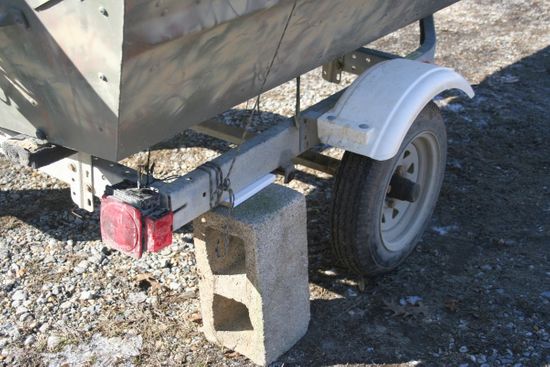
PERFORM A TRAILER INSPECTION. For those boaters who keep their boats on a trailer, now’s the time to inspect that critical piece of equipment as well. Check the trailer’s structural condition, the lights, the brakes, and inspect the braking system, including the reservoir and brake fluid, if applicable, and of course, the bearings. While disassembling the bearings is fairly time-consuming, boaters can do a much faster spot-check by simply jacking up one side of the trailer at a time and spinning the wheels by hand. If the bearings are in good shape the wheels will spin freely and smoothly; if there’s any clacking sound or banging or resistance while trying to spin the wheel, then those bearings need to be opened up, make a closer inspection, and fix what needs fixing.
INSPECT ALL ONBOARD SAFETY GEAR. It’s a good idea to keep a regular schedule to check safety gear. (Just remember, if boaters don’t inspect it, an officer in uniform may do the job for them!) It’s far too easy to forget about the expiration of flares after they’ve sat onboard for three years. And the physical condition of the gear counts, too. Throwable PFDs are a great example of why. Everyone needs at least one aboard, and if it gets checked by the Coast Guard, they won’t merely look at it, they’ll also grab the straps and pull. If the fabric has dry-rotted or weakened with age and it rips, the coasties won’t consider it a valid PFD and could issue a ticket. This is also a good time to check the first aid kit—even though it’s not USCG-required gear, it’s a good idea to have one aboard. A quick check will help make sure the medications in it aren’t old and expired, and any supplies that need refilling are added to the shopping list.