Electric Outboards: Is There One in Your Future?
More and more electric or hybrid cars are hitting the road, but what about boat engines? Will we soon enjoy the silent hum of a battery-powered outboard? Many of our fishing boats already have electric trolling motors, and plenty of anglers also use electrics on car-toppers, canoes, or kayaks. But when you go beyond three or four horsepower, battery demands become overwhelming. And yes, electric outboards do go well beyond three or four horses.
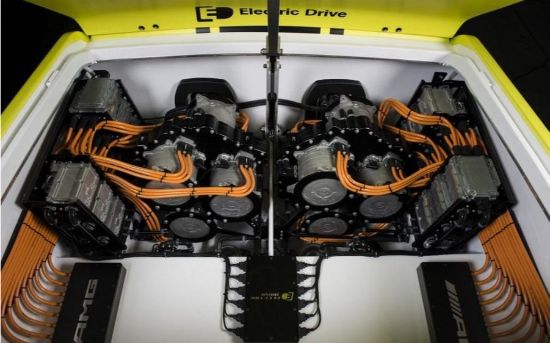
In the past year or so, for example, we’ve seen the introduction of an 80-hp outboard from Torqeedo, a 180-hp engine from ReGen Nautic (they say a 300-hp model is on the way), and even a 38’ (11.56 m) Cigarette go-fast boat packing 2,200 electric horsepower.
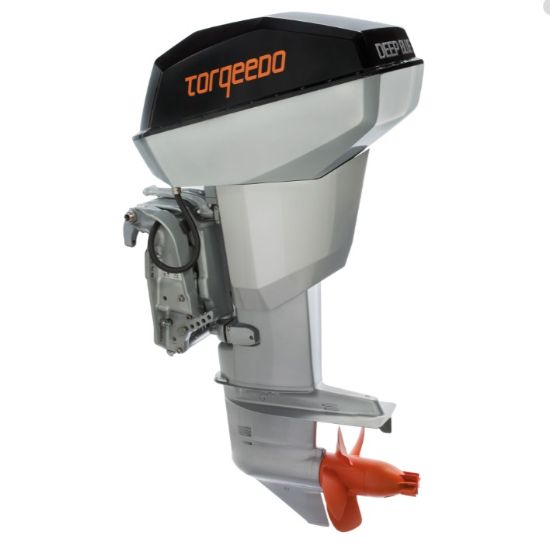
So, if all these electric engines already exist, what’s the problem? You might guess it is cost, and yes, some of these motors are quite pricey. But the motor alone is not so much more than a gasoline-powered outboard of equivalent size that the savings in fuel costs wouldn’t eventually make up for it. The 180-hp ReGen, for example, lists at about $25,500. Compare that to a 175-hp Yamaha 4-stroke, which will run you about $17,000.
Battery Cost
The real problem lies in the batteries. To jam-pack enough juice into a boat to feed a primary propulsion system for more than a few minutes, that boat needs to be loaded down with batteries. And not just your garden-variety deep cycle batteries, either. We’re talking about cutting-edge lithium-ion power cells that are quite expensive.
Remember that 80 horsepower Torqeedo? Try pricing it out with four Power 26-104 LNMC batteries that are necessary to get a reasonably full “fuel tank” of 10,740 watt-hours – which isn’t exactly as full of a fuel tank as one might hope for (you can count on an hour of full-tilt running, or two to three hours at around a ¾ throttle cruise). Then, add in the costs of chargers and controls. In total, you’ll be spending nearly $100,000 on the power system – and that does not include the cost of the boat.
Now let’s look at the long-term economic view as compared to a gas-burner in the 70 to 80-hp range. The gasoline outboard will cost you less than $10,000. Figure gas at three bucks a gallon (3.78 L) — high for now, but in the future, who knows — and you’d have to use 30,000 gallons (113,562 L) before the electric rig so much as breaks even. That just doesn’t make electric engines very appealing.
Weight
Now add in the second problem with putting all this battery power aboard a boat -- it’s heavy, and it takes up a lot of space. You already know, of course, that both weight capacity and space are at a premium on all kinds of boats. Remember that Cigarette boat? It’s quite literally stuffed with batteries, to the tune of two tons. Yet that reportedly gets the boat a whopping 30 minutes at 70 MPH with “a few blasts” up to 110 mph. Again, that’s not exactly what we’d hope for in a “full” fuel tank.
But these problems are nothing new. The electric boat has been around since a Frenchman named Gustave Trouve invented the world’s first electric outboard and cruised a 17-footer (5.18 m) down the River Seine in 1880. But he couldn’t cruise it very far. Even back then, battery power and range were the major limiting factors.
Well over 100 years later, the engines themselves may well be ready for prime time. But until we come up with a power-pack that’s radically better than even the best of the lithium-ions we have today — and which carry reasonable price-tags as well — using an outboard for primary propulsion on a boat will mean a radical loss of range and an epic jump in price. The bottom line: Unless you’re wealthy, at least for the time being, running an all-electric boat is not a realistic option.
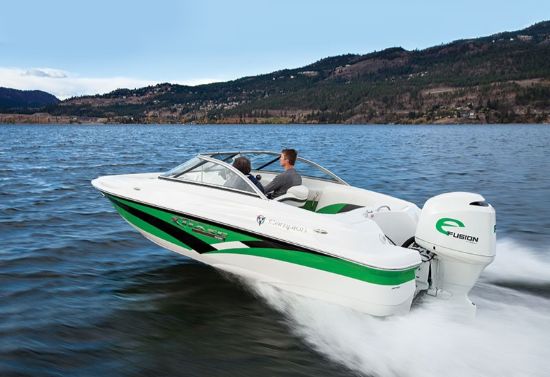
What about hybrids? They seem to work pretty well on dry land, and cars like the Toyota Prius have proven that hybrid technology is cost-effective, right? No, boats are just too different from cars for the effective adoption of hybrid technology, in large part because they can’t enjoy the benefit of regenerative braking. Plus, you can’t coast after getting up to speed. The entire concept of hybrid energy on a boat doesn’t make much sense at all. The dynamics of moving over a solid surface versus moving through a liquid are simply too different.
True, we’ve seen plenty of possibilities in this department, in the form of inboard boats like the Greenline models. Yet the technology combination that works so well on dry land doesn’t get very far on the water. As in, it’ll get you maybe 20 miles. Then, you’re out of juice and have to run on diesel power again. Even worse, it’ll only get you those 20 miles at jogging speeds, with a tailwind.
Propane
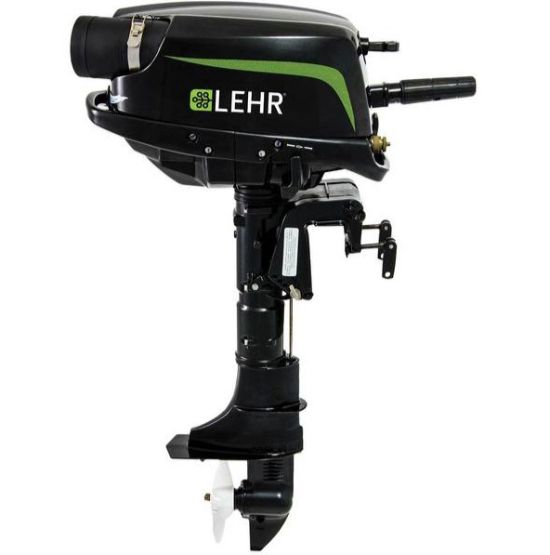
If going all-electric is beyond our current ability, are there other options? Yes, Lehr has proven that propane is a viable option, with its line of 2.5 to 25 HP outboards. And an outfit called BlueGas Marine has modified a pair of 275 HP Mercury Verados to run on natural gas and claims zero performance penalties. But truth be told, despite all the hype over alternative power sources, if you plan to run a powerboat with anything over a handful of horsepower, at least for the foreseeable future it’ll be powered by a gasoline outboard.