Access More Boat Tests
Already have an account? Login
Yamaha 255XD (2025-)
2 x 250-hp Supercharged 4-cylinder, 4-stroke, SVHO Yamaha Marine Engines

Brief Summary
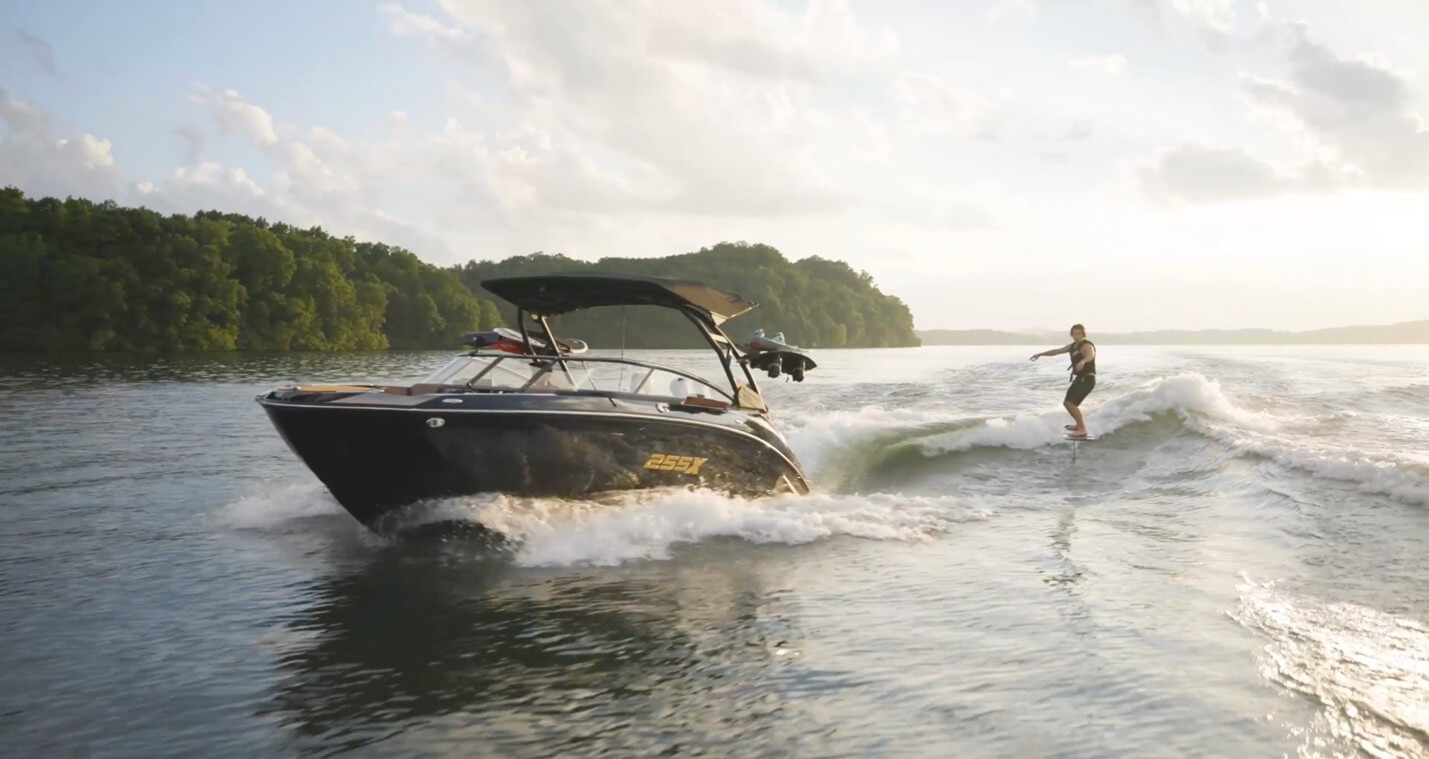
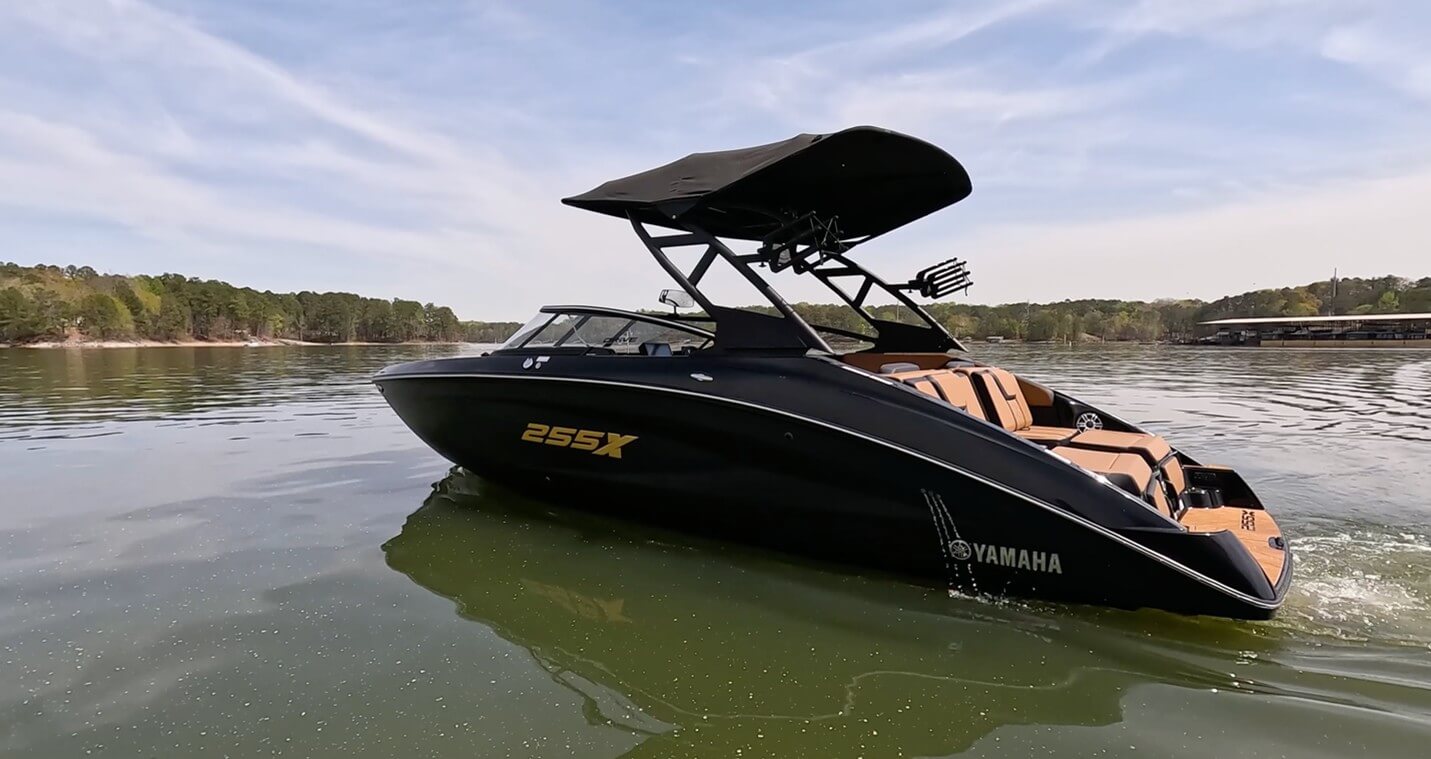
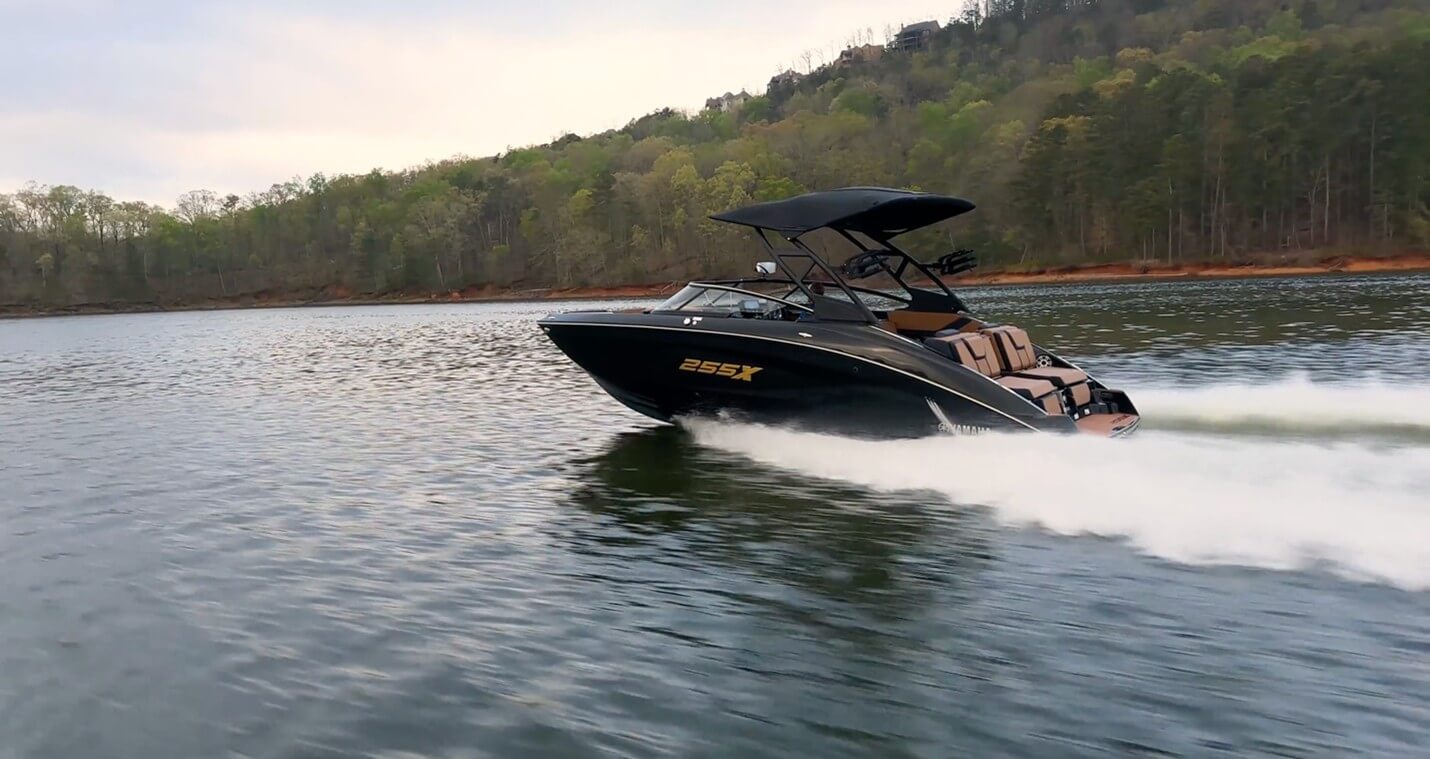
From its dynamic profile to its exterior colors in black, powder blue, or mist gray, to its stylish interior and to its rakish Bimini and wake board holders, the flagship of the Yamaha’s wakesurfer line awaits only its passengers to take them on an energized day of on-water fun and excitement. And while waking and skiing are high on the list, the 255XD can also supply an equally sensational day out with family and friends at a favorite gunkhole.
Test Results
| RPM | MPH | Knots | GPH | MPG | NMPG | SM | NM | dBa |
|---|---|---|---|---|---|---|---|---|
| 1250 | 3 | 2.6 | 1.2 | 2.6 | 2.3 | 176.1 | 153 | 61 |
| 1500 | 4.5 | 3.9 | 1.5 | 3 | 2.6 | 202.5 | 176 | 62 |
| 2000 | 5 | 4.3 | 1.9 | 2.6 | 2.3 | 177.6 | 154.4 | 66 |
| 2500 | 6 | 5.2 | 2.4 | 2.5 | 2.2 | 168.8 | 146.6 | 75 |
| 3000 | 7 | 6.1 | 3.7 | 1.9 | 1.7 | 129.5 | 112.5 | 77 |
| 3500 | 8 | 7 | 5.4 | 1.5 | 1.3 | 100 | 86.9 | 80 |
| 4000 | 9 | 7.8 | 7.4 | 1.2 | 1.1 | 82.1 | 71.3 | 83 |
| 4500 | 12.5 | 10.9 | 10.1 | 1.2 | 1.1 | 84 | 73 | 86 |
| 5000 | 18.5 | 16.1 | 13.4 | 1.4 | 1.2 | 93.2 | 81 | 87 |
| 5500 | 31 | 26.9 | 17.2 | 1.8 | 1.6 | 121.7 | 105.7 | 90 |
| 6000 | 38.5 | 33.5 | 19.9 | 1.9 | 1.7 | 130.9 | 113.8 | 90 |
| 6500 | 43.5 | 37.8 | 25.4 | 1.7 | 1.5 | 115.6 | 100.5 | 92 |
| 7000 | 49.5 | 43 | 33.3 | 1.5 | 1.3 | 100.5 | 87.3 | 95 |
| 7500 | 54.5 | 47.4 | 37.8 | 1.4 | 1.3 | 97.3 | 84.6 | 99 |
Specifications
| Length Overall |
24' 6" 7.47 m |
|---|---|
| Beam |
8' 6" 2.59 m |
| Dry Weight |
4,561 lbs 2,069 kg |
| Draft |
19" 0.48 m |
| Deadrise/Transom | 20° |
| Fuel Capacity |
75 gal 284 L |
Acceleration Times & Conditions
| 0 to 30 | 6.8 |
|---|---|
| Props | Jet Drive |
| Load | Persons and Gear: 500 lbs/227 kg; Fuel on board: 419 lbs/190 kg (10% fuel reserve); Total: 919 lbs/417 kg |
| Climate | 62°F; humidity: 60%; wind: 5-10 mph; flat; fresh |
Engine Options
| Std. Power |
2 x 250-hp Supercharged 4-cylinder, 4-stroke, SVHO Yamaha Marine Engines |
|---|
The Philosophy of Speed and Excitement
Captain's Report Yamaha 255XD
by Capt. Ken Kreisler
Major Features
Since all Yamaha wakeboats come fully outfitted, the following is a list of the 255XD’s equipment:
- Ski locker
- Removable dinette table w/pedestal
- Bow filler inserts
- Hinged seat cushions
- Tilt steering
- Chill-Cool vinyl upholstery
- Integrated swim platform
- Stainless telescoping reboarding ladder
- Wet stern storage
- DRiVE® X
- 12.3" Connext Screen
- 7 premium Hertz marine speakers
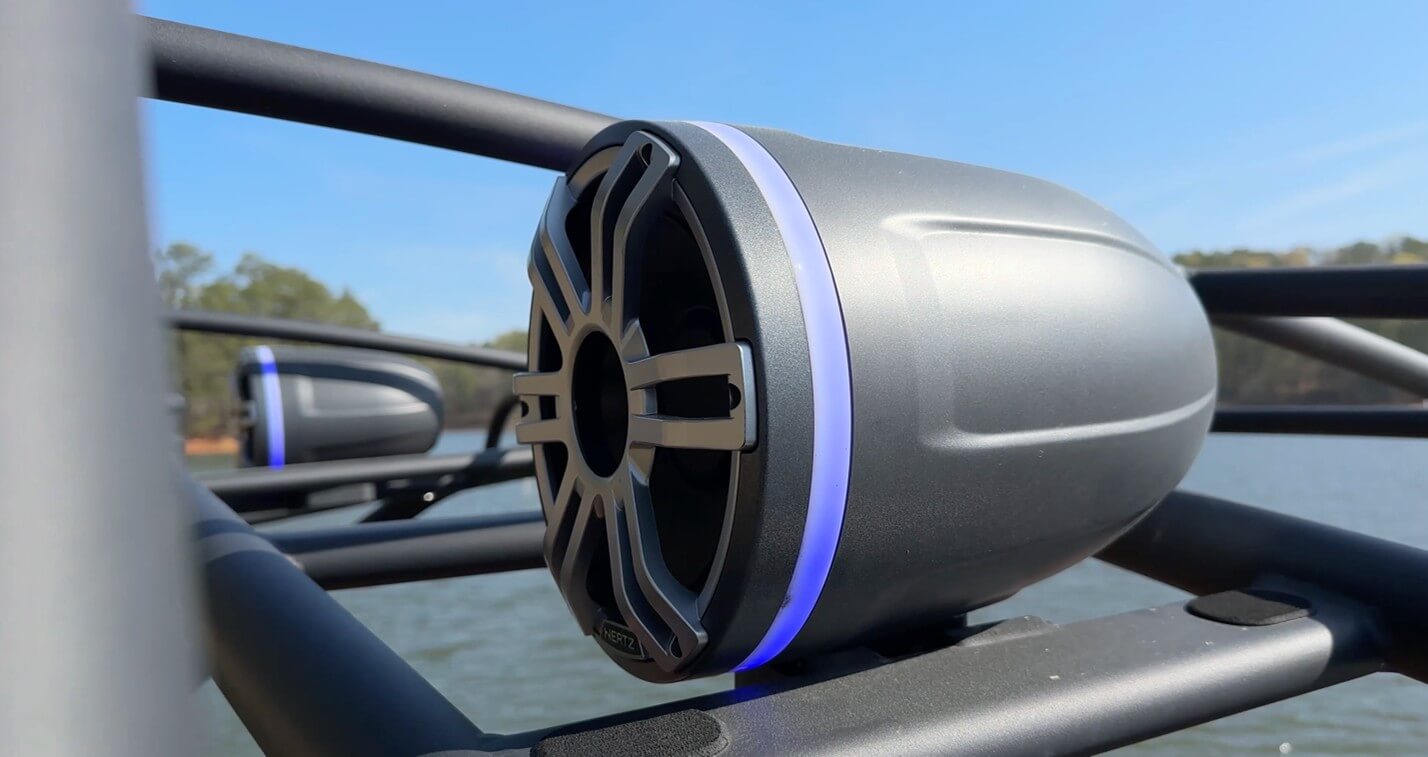
- 2 premium Hertz tower speakers
- Painted trailer w/swing away tongue
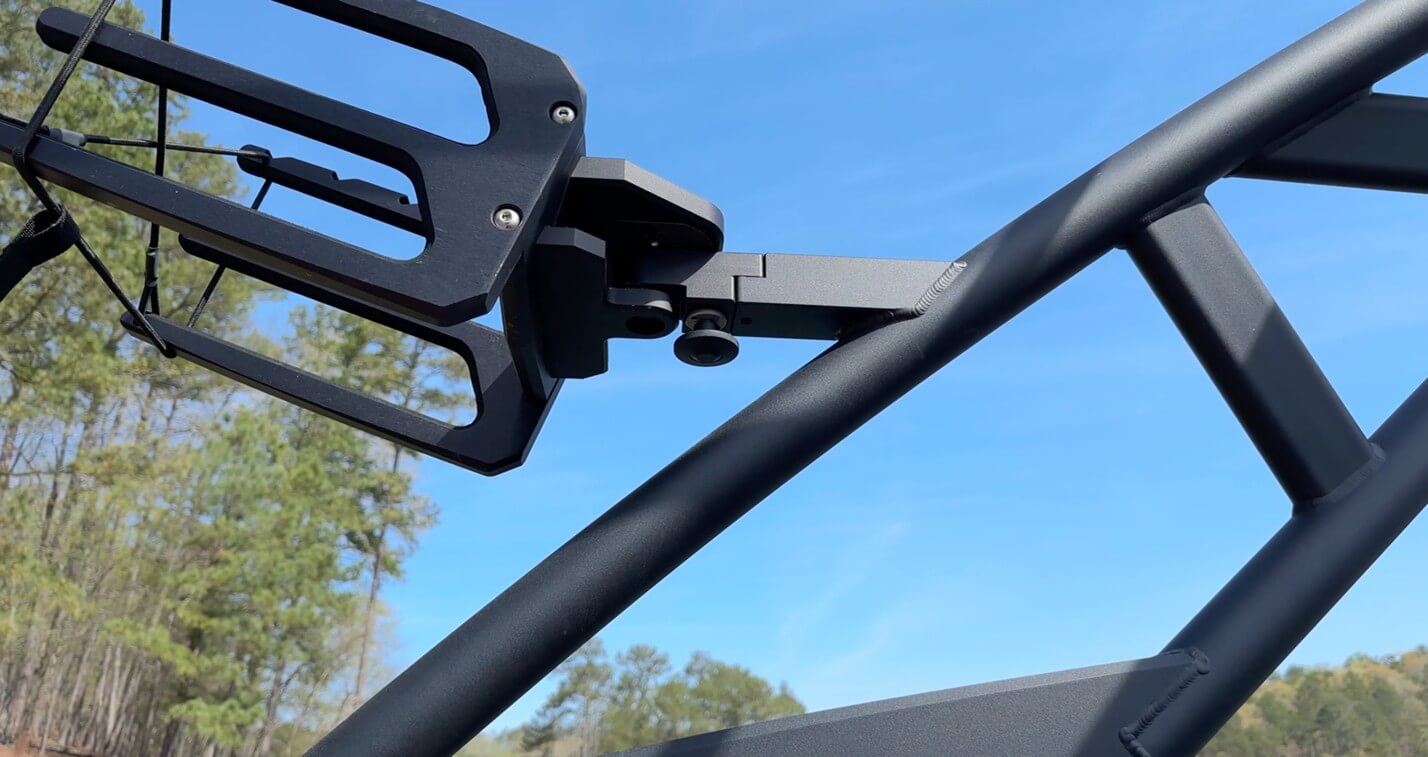
- Aluminum folding tower w/board racks and tow hook
- Stainless bow rails
- Tow hook
- Bimini top
- Yamaha wake-enhancing hull
- Premium windshield frame
- WakeBoosters®
- Oversized rear view mirror at the helm
Vessel Inspection
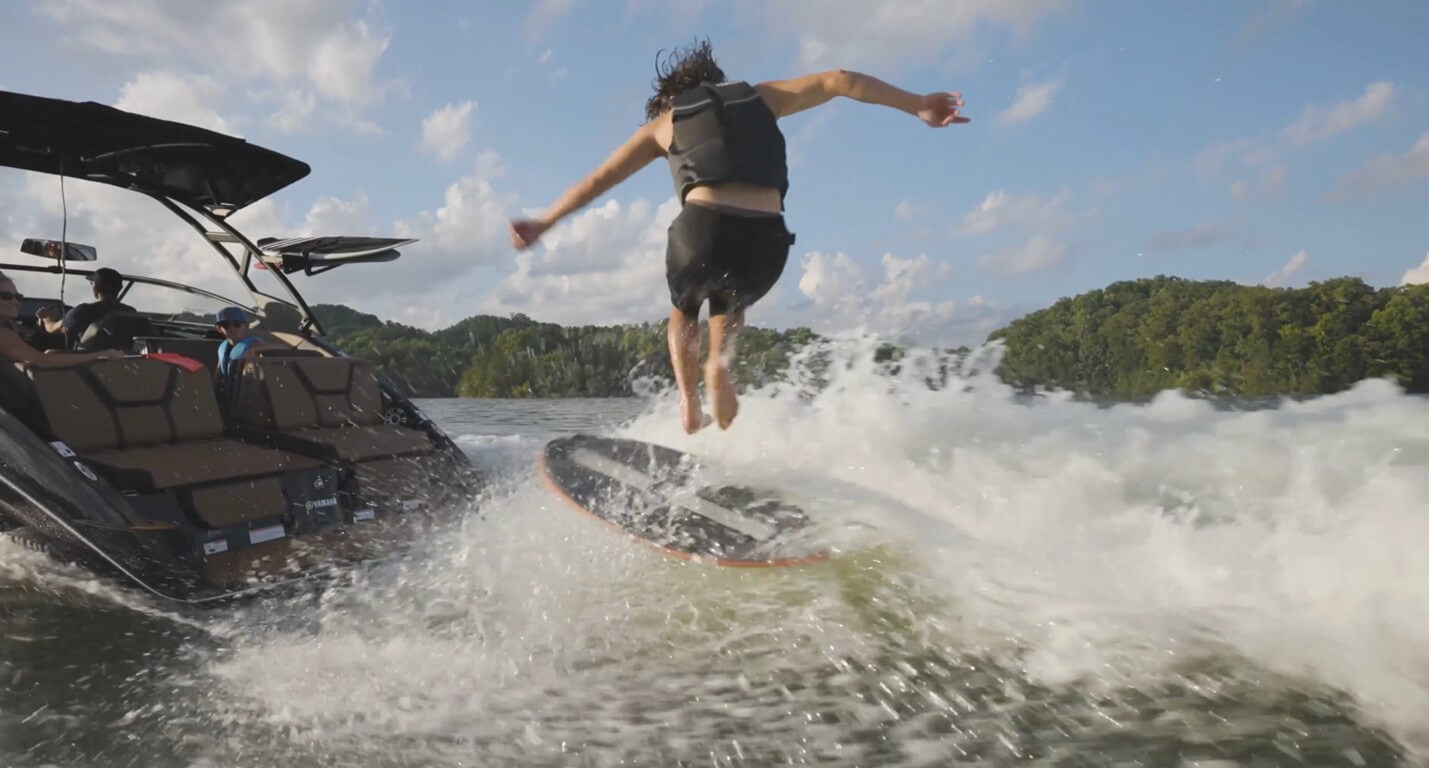
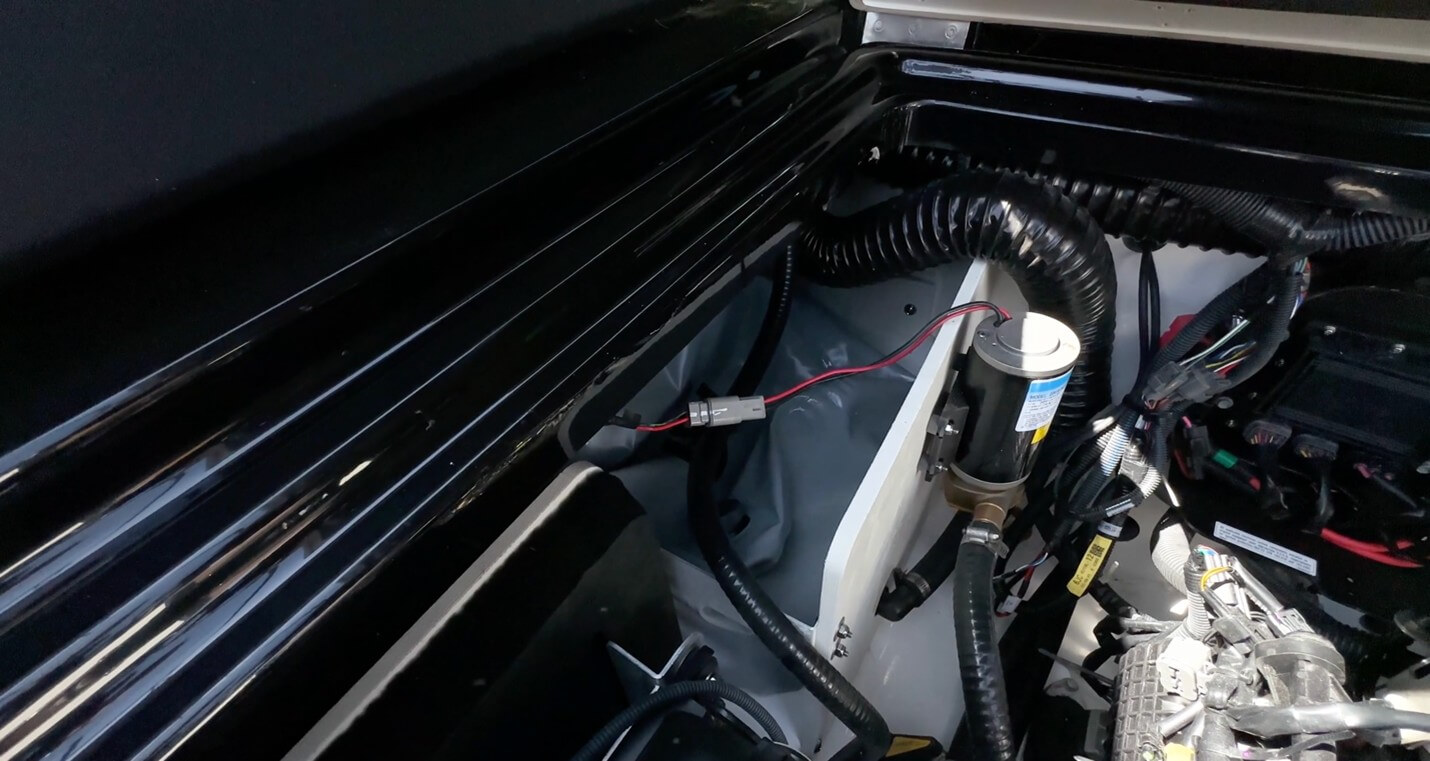
Wakeboats are a special breed and to ensure the optimum conditions necessary for riding, the Yamaha 255XD is equipped with all that is takes. The aft-mounted twin 250-hp Yamaha jets guarantees she will sit in the water just right and along with 1,600 pounds of factory-installed ballast, E-Series® Throttle Control with push button start/stop, RPM engine sync, and single level throttle level pairing, and integrated WakeBoosters® on either side of the boat for enhanced wake action, will provide adrenaline-pumping opportunities for the riding enthusiasts.

A Word About Performance
Whether pulling on its docklines while tied up waiting to get out on the water, or underway with someone riding wakes aft, the Yamaha 255XD is all about in your face excitement. While jet boats have no trim, our 255XD quickly jumped up on plane with out of the hole shots coming in at 0-10 mph in 2.2 seconds, 20 mph in 4.2 seconds, and 0-30 mph in 6.8 seconds. She handled all our maneuvers, including S-turns, doughnuts, and straight runs all under control without any slippage. Our test day saw air temps at 62º, winds between 5-10 knots, and 60% of humidity.
Our test weight came in at 5,480 lbs/2,449.4 kg, with 78% of our 75 gallon fuel capacity. There were two passengers aboard. We topped out at 58.0 mph at 7500 rpm with a best cruise of 38.5 mph at 6000 rpm and a calculated range of 131 statute miles with a 10% fuel reserve.
Observations
The Yamaha 255XD is a premier, jet powered wakeboat offering exciting opportunities for wakeboarding and ski enthusiasts. She is a fully found boat with all the bells and whistles associated with this sport including Yamaha power in the form of a pair of jet powered, 500 combined horsepower inboards with E-SERIES® THROTTLE CONTROL, advanced 12.3'' CONNEXT® Touchscreen, and Integrated Wakebooster®. And as important, she carries the Yamaha name indicating a dedicated edict towards providing a quality product and one that the company stands behind.
If your passion for this type of action runs deep, the Yamaha 255XD is must-see. The sooner you set up a visit and sea trial, the better.
Remember, life is better on a boat!
To truly understand what the new Yamaha 255XD Wake Boat is all about, one needs to first delve into the company’s unique, across the board approach to its design and engineering for all its products.
The Japanese word Kando is used to describe the sensitivity and satisfaction both in physical and emotional aspects you get from an experience. This is the viewpoint taken to make sure that when you take the wheel of the 255XD, you will not only encounter the thrilling, adrenalin rush of performance but have the satisfaction and confidence in the knowledge your ownership has been tested and built to exacting standards of excellence. In the words of Yamaha founder Genichi Kawakami, “It isn’t a product if it isn’t world class.”
Features & Performance Review Transcript
Overview
Captain Tripp's introduction: "This is a jet boat from Yamaha, and it's a fantastic family-friendly boat as well."
Power
Twin Yamaha SVHO engines — supercharged four-cylinder engines producing 250 horsepower each.
Sea Trial — Handling Impressions
Captain Tripp noted a jet boat characteristic upfront: "The one thing to remember about a jet boat is there's no trim, so that's one less thing you have to worry about."
On-plane feel: "The boat gets up on plane really quick. It feels really light and nimble, which of course it pretty much is."
Acceleration run: At approximately 7,000 RPM the boat ran 48 mph; pushed to wide-open throttle it reached 57–58 mph with 60% fuel aboard — Captain Tripp's assessment: "That's really quick for a jet boat, especially a wake boat too."
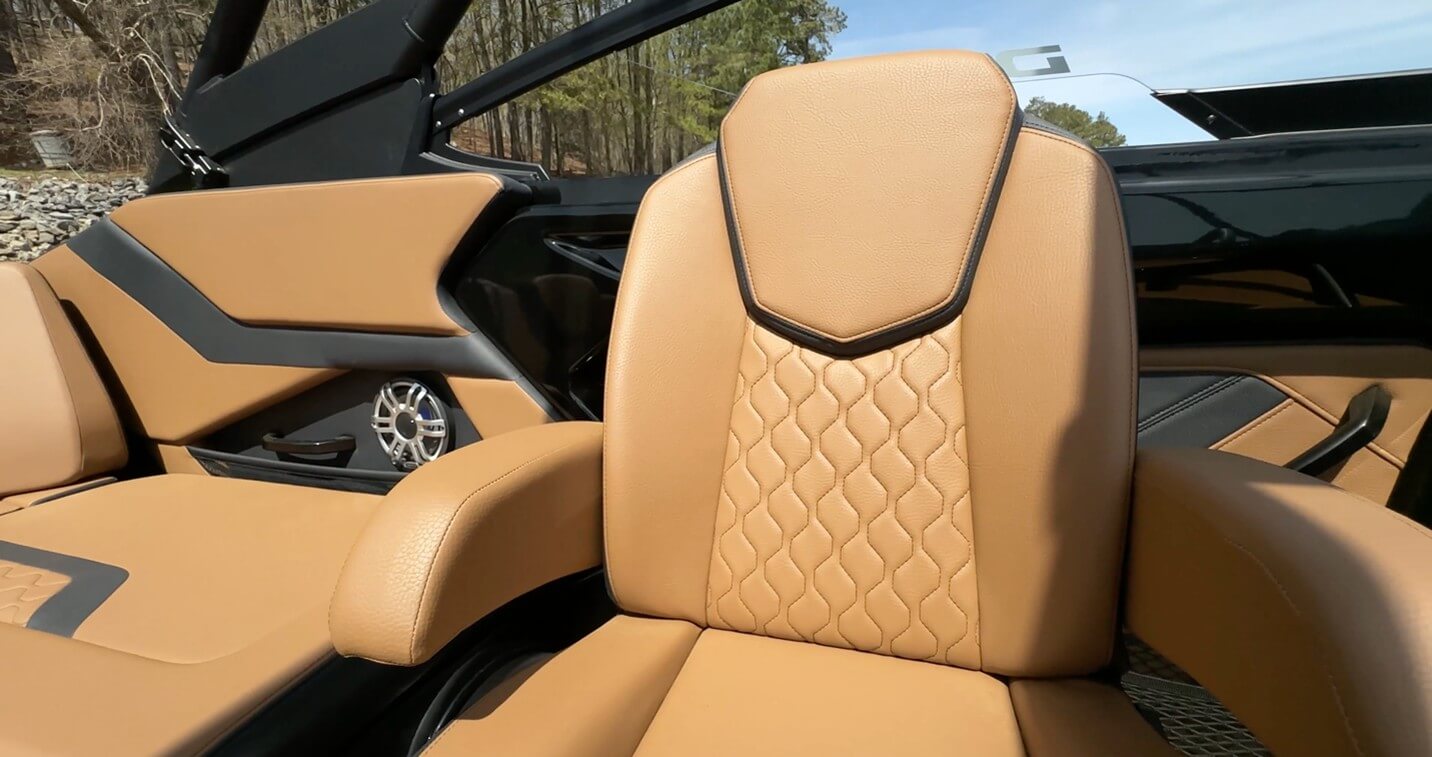
Cruise comfort: Backing down to a comfortable cruise, Captain Tripp noted running at 39 mph with the bolster down for comfort: "This seat has a lot of padding. It's kind of something you don't see very often. This is very soft, good armrest... this will be an easy, comfortable cruise."
Turning: "S-turns, the boat grabs really quickly. Put the throttle to the floor — that's how you're gonna get the sharpest turns on this boat... it really grabs and comes up out of the hole."
Specifications (Test Boat)
- Length overall: 24 feet, 6 inches
- Beam: 8 feet, 6 inches
- Draft: 19 (inches, unit as stated)
- Test weight: 5,480 pounds, with 78% of the 75-gallon fuel capacity aboard and two passengers
- Engines: twin four-cylinder Yamaha SVHO, jet propulsion
Performance Numbers
- Top speed: 58 mph at just over 7,500 RPM
- Best cruise: 38.5 mph at 6,000 RPM, achieving 1.9 miles per gallon
- Range at best cruise: approximately 131 miles, with a 10% fuel reserve
- Hole shot 0–10 mph: 2.2 seconds
- 0–20 mph: 4.2 seconds
- 0–30 mph: 6.8 seconds
Helm
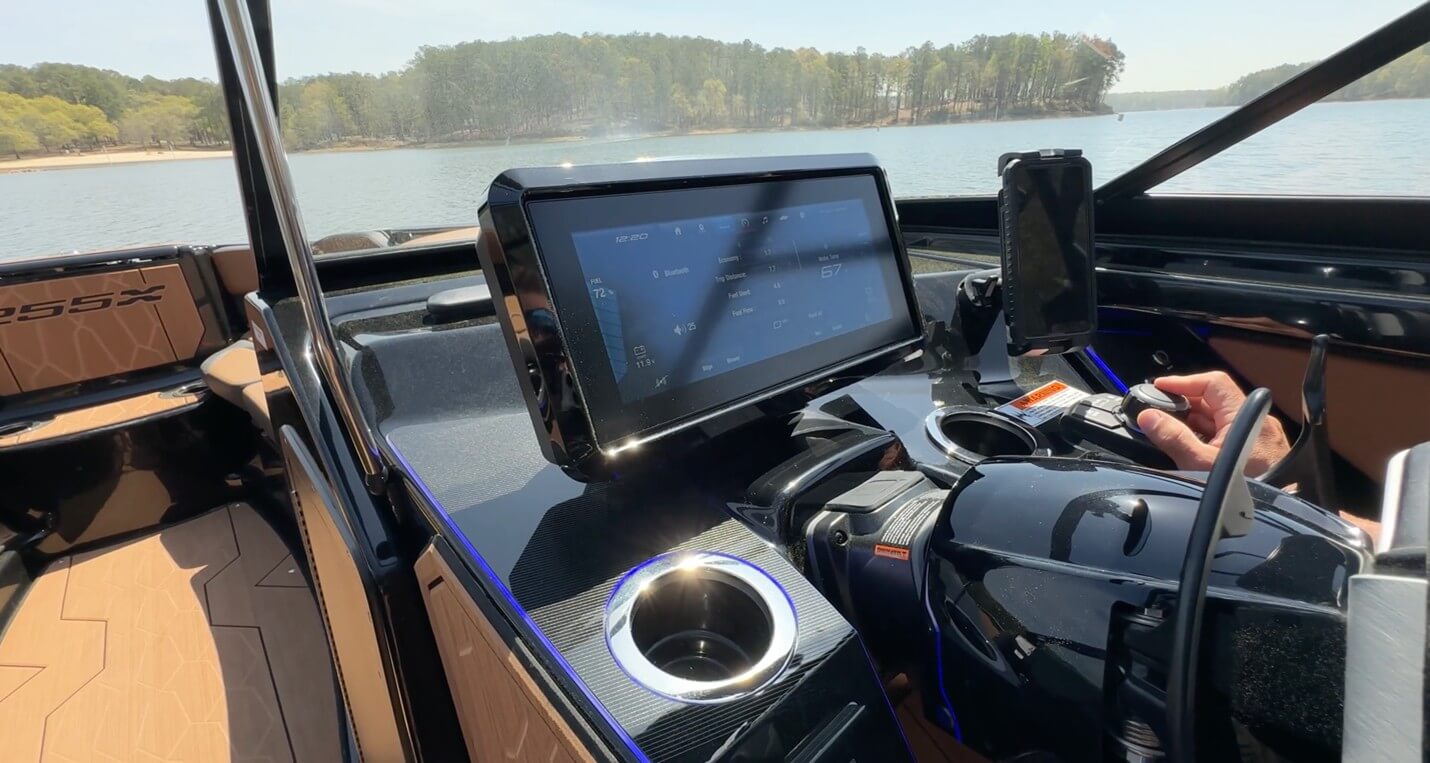
Captain Tripp's framing: "This is really the brain and the heart and soul of this boat, and Yamaha has done a lot here with their Connect system and the Drive-X controls."
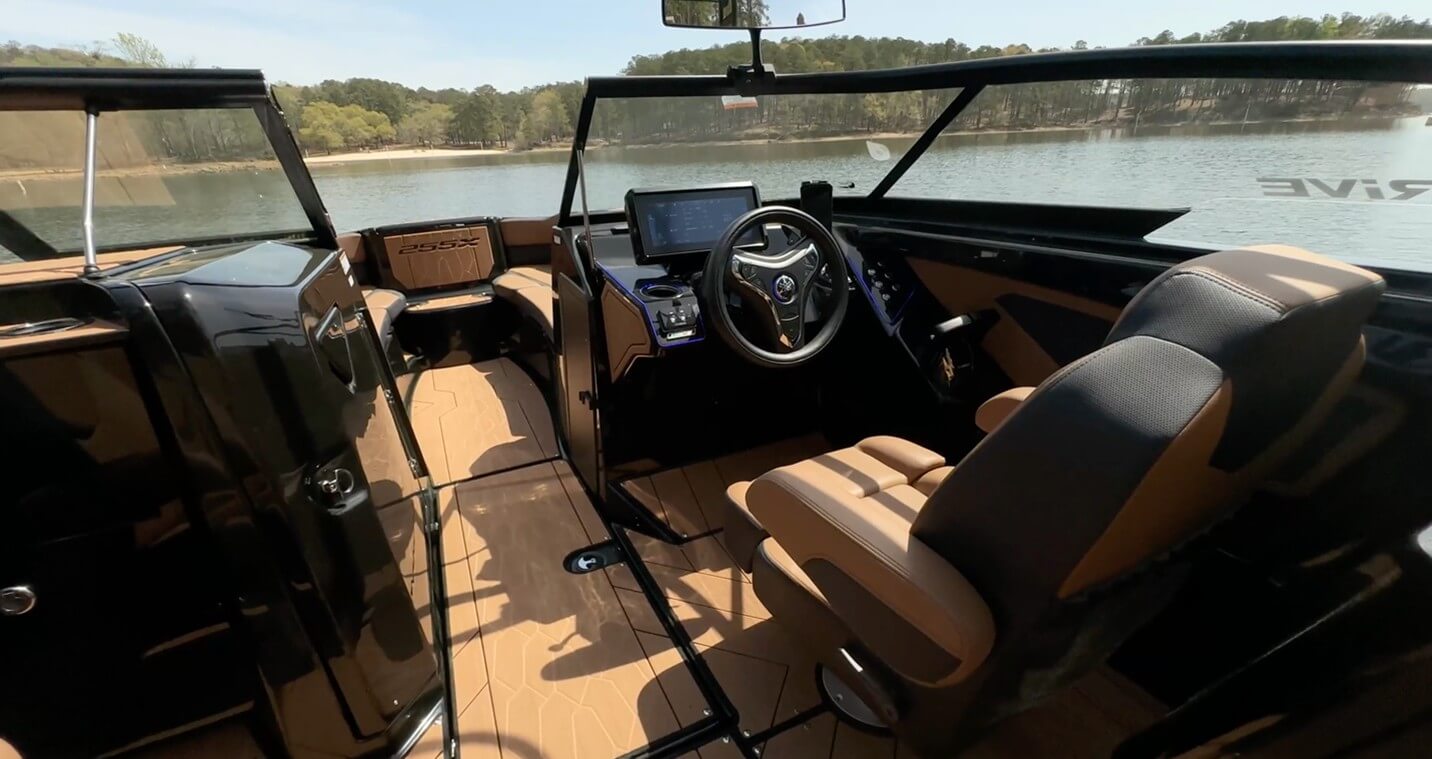
Helm seat: Bolstered, with armrests on both sides, attractive stitching, comfortable, reclines and swivels 180 degrees to face passengers.
Control station: Two cup holders (starboard), a small cubby, dual throttle controls (twin engines), push-button switches for frequently used functions, a physical controller for the Connect touchscreen (useful with wet hands), and a Scanstrut phone charging mount.
Drive-X system: Noted for later demonstration — assists docking and close-quarters handling.
Connect Touchscreen System
Captain Tripp walked through the interface: home screen, navigation screen, engine data screen, wake sports screen (with configurable profiles for wake surfing left/right or different speed preferences), Bluetooth/audio control (Hertz audio system), and a lighting selection screen (helm lighting, courtesy tower lighting, dock lights).
Companion Seat
Nearly identical to the helm seat, minus the bolster. Captain Tripp noted: "I am sitting low and safe in the boat, but still high enough where I can help the operator navigate." Features: two cup holders, a small cubby, underneath storage with netting for medium items, small paperwork storage with magnetic latches, a grab handle, dual USB ports, an additional storage cubby with netting, and three cup holders.
Cockpit Seating / Upholstery
Total seating for approximately seven guests (including helm seats), per Captain Tripp's estimate.
Upholstery: "Chill Cool" vinyl technology, stated to run 15°F cooler than traditional vinyl of the same color — allowing darker color tones (as used in this boat's black-on-black scheme) without excess heat retention.
U-shaped seating: Padded backrests throughout, with speakers, a grab handle, small-item storage, and cup holders positioned below.
Galley (Starboard)
A flip-up section provides additional countertop space, with storage and a dedicated cooler underneath.
Ballast System
Captain Tripp highlighted this as central to the boat's wake-boat design: a three-zone ballast system totaling 1,600 pounds.
Placement:
- Two ballast bags at the transom (port and starboard)
- A fourth bag on the starboard side, just behind the helm seat
- A fifth bag centerline, slightly forward
All ballast and wake settings are controlled through the Connect touchscreen.
Bow
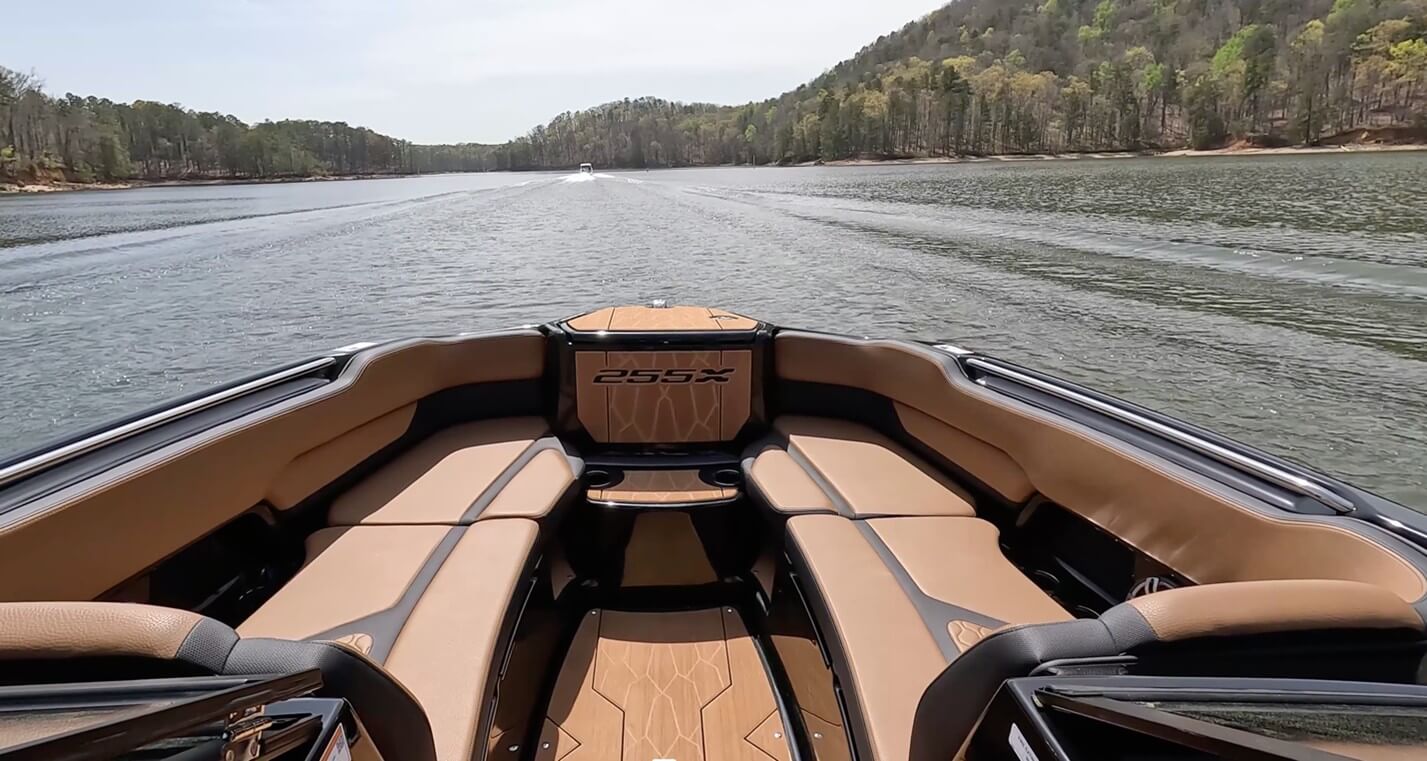
Weather protection: An air dam can close up the bow area for added cockpit protection in wind/cold.
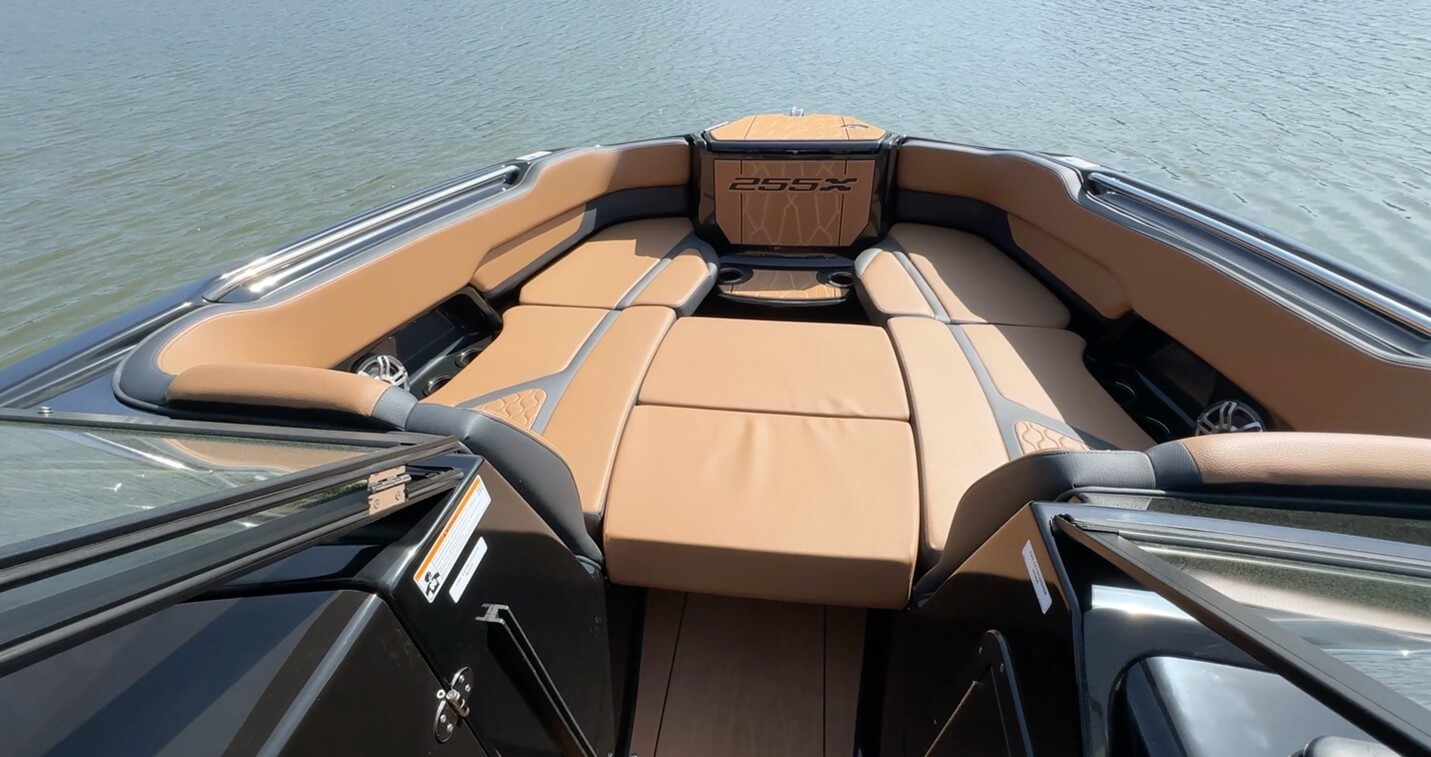
Bow shape: Captain Tripp described this as a "shovel nose" design, providing more interior volume for seating: "It starts at six foot two inches and only tapers down to four foot two inches. That's only losing two feet. Traditional designs, you see more of a triangular shape, so your seating is gonna kind of terminate into itself. This gives that width farther forward."
Bow seating detail: Good cushioning, a grab handle, two cup holders, and a speaker. Padding wraps the full perimeter for comfortable backrests with multiple occupants. Filler cushions can convert the area into one large sun pad. Removing the forward cushion creates a "rumble seat" position for those wanting to be close to the water-sports action. Underneath storage (carpet-lined) is accessed via a cushion that flips up and stays out of the way; this storage is mirrored to starboard.
Bow Access / Ground Tackle
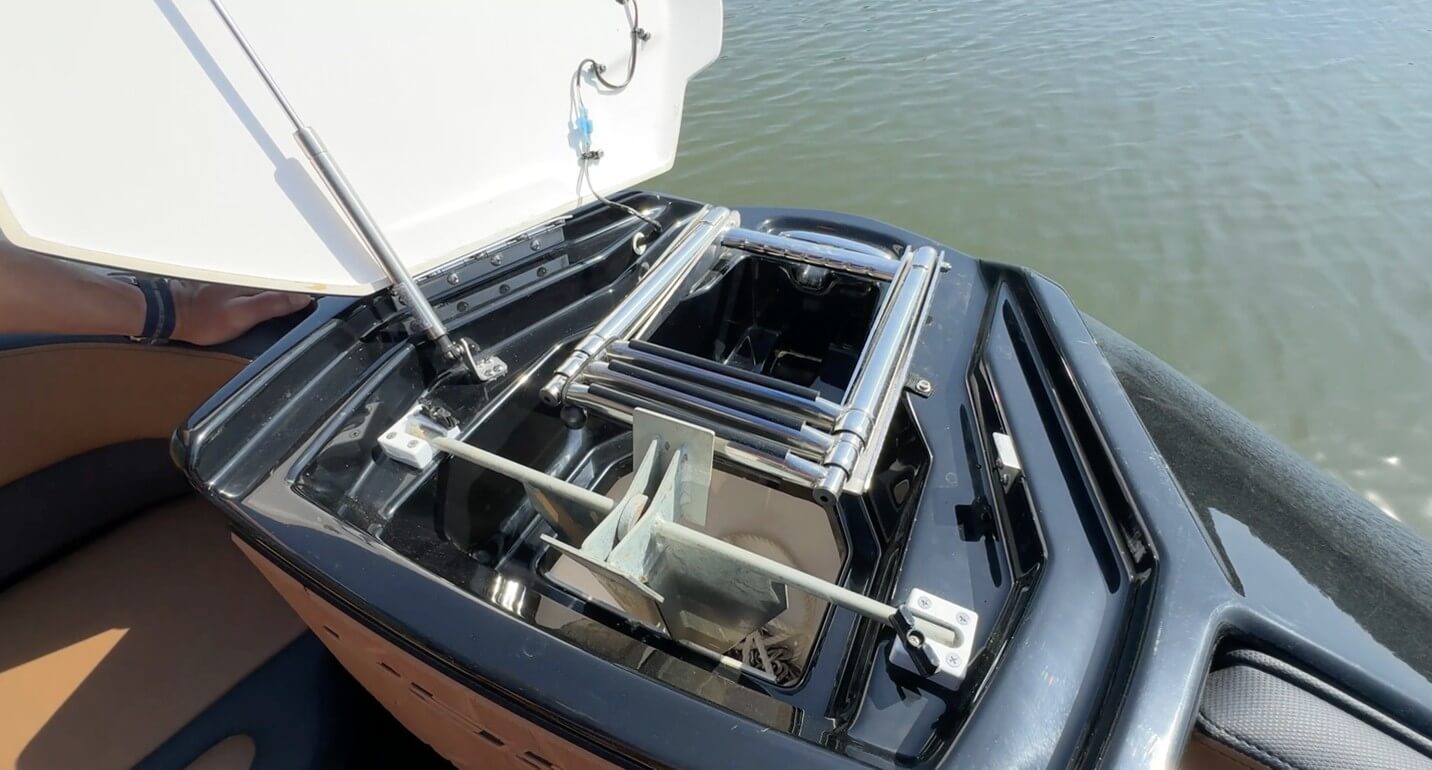
A step up to the bow is covered in non-slip marine mat on both sides. Beneath: the anchor locker, a dedicated boarding ladder, storage for the anchor and rode, and a cleat to secure the rode.
Port Console
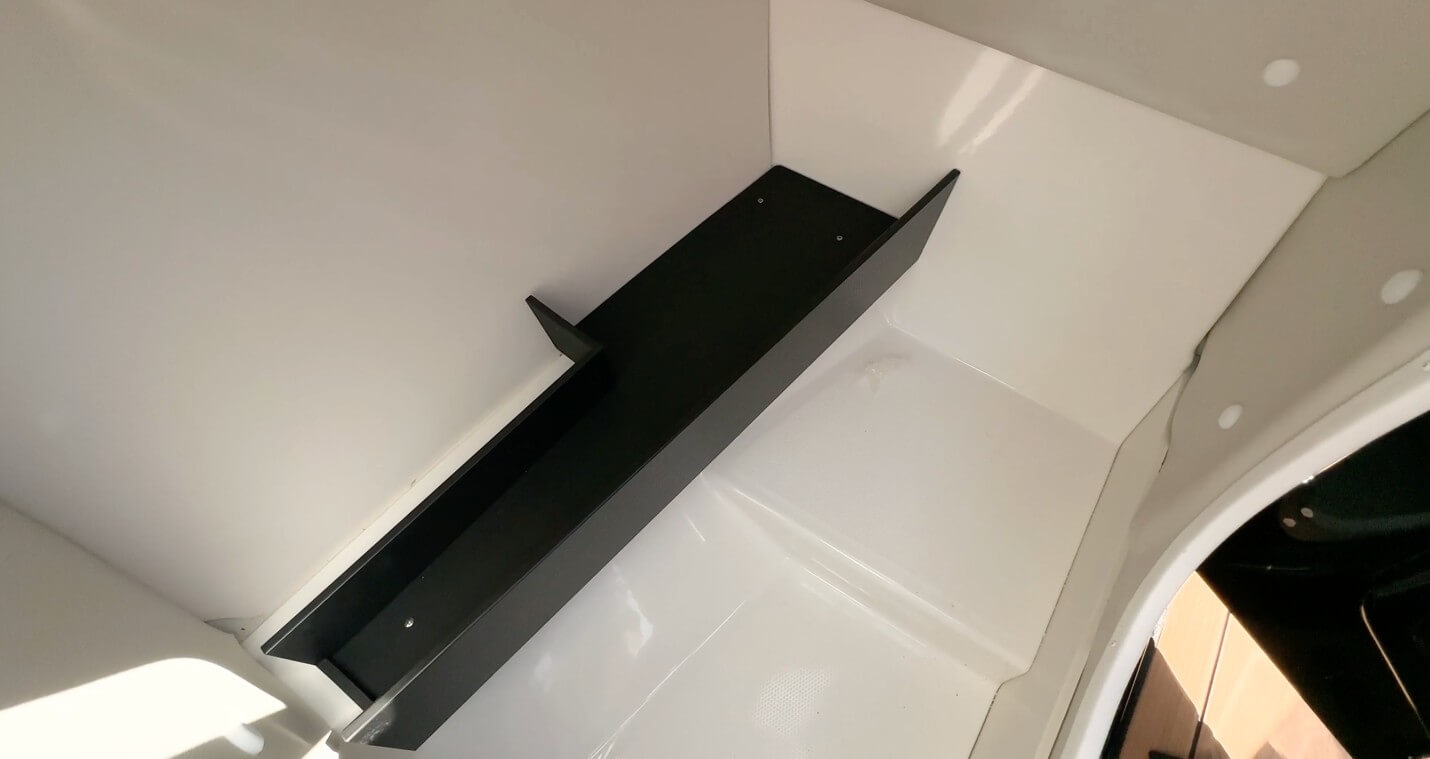
Functions as storage and, in a pinch, a private head space. Includes an overhead hanging rod (for drying PFDs, etc.), a built-in shelf with large fiddle rails, and dedicated storage on the door's backside for the swim-platform table leg. Additional netted storage and a spot for a toilet paper roll are also present.
Tower / Hardtop
Extends well aft to cover the full cockpit area, with a zippered section that can be opened for extra light without fully removing the top. Large Hertz speakers are mounted along the top of the tower, with courtesy lighting beneath, finished in black powder coat to match the boat's overall color scheme.
Folding tower: The entire top hinges down via beefy latches on both sides — useful for clearing low bridges or garage storage.
Board Racks
Deployable outboard on either side to free up interior space.
Aft/Swim Platform Convertible Seating
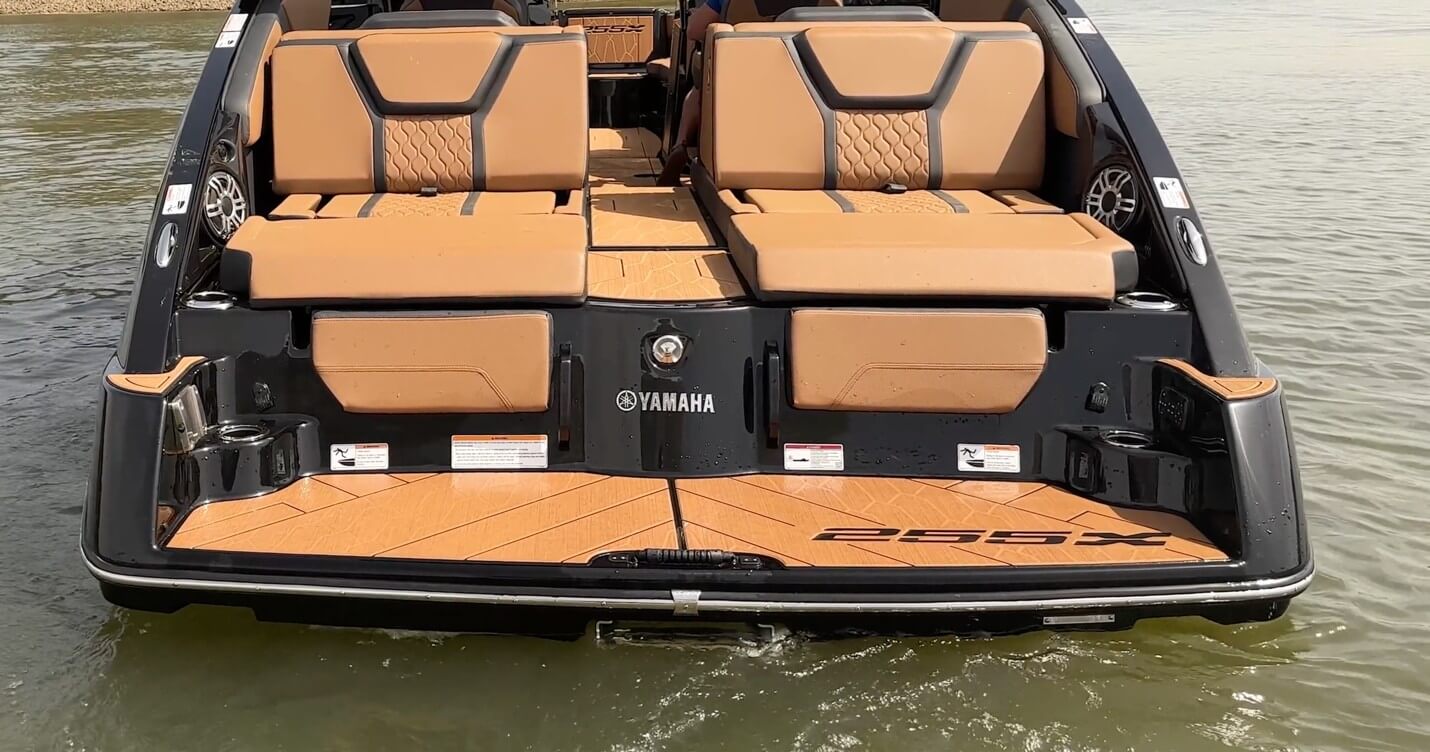
The aft seats convert via a simple slide mechanism to face aft, creating sun pad areas on either side — Captain Tripp noted this becomes a popular spot for spectators/photographers during wake surfing, or for added ballast weight to increase wake size.
Swim platform: Extra padding for comfortable seating (e.g., at a sandbar). Features include grab handles, a tow eye, cup holders, speakers, USB charging, and audio system controls. Additional storage is hidden behind the seat backs, with a jet system clean-out access point nearby for clearing debris.
Swim ladder: Telescopic, centerline, tucking neatly under the platform. Captain Tripp noted the safety benefit of the jet drive here specifically: "Remember, this is a jet drive boat, so there's no propellers under there that are somewhat of a hazard for swimmers as they're boarding on and off the swim platform. So that is a good feature."
Drive-X Docking System Demonstration
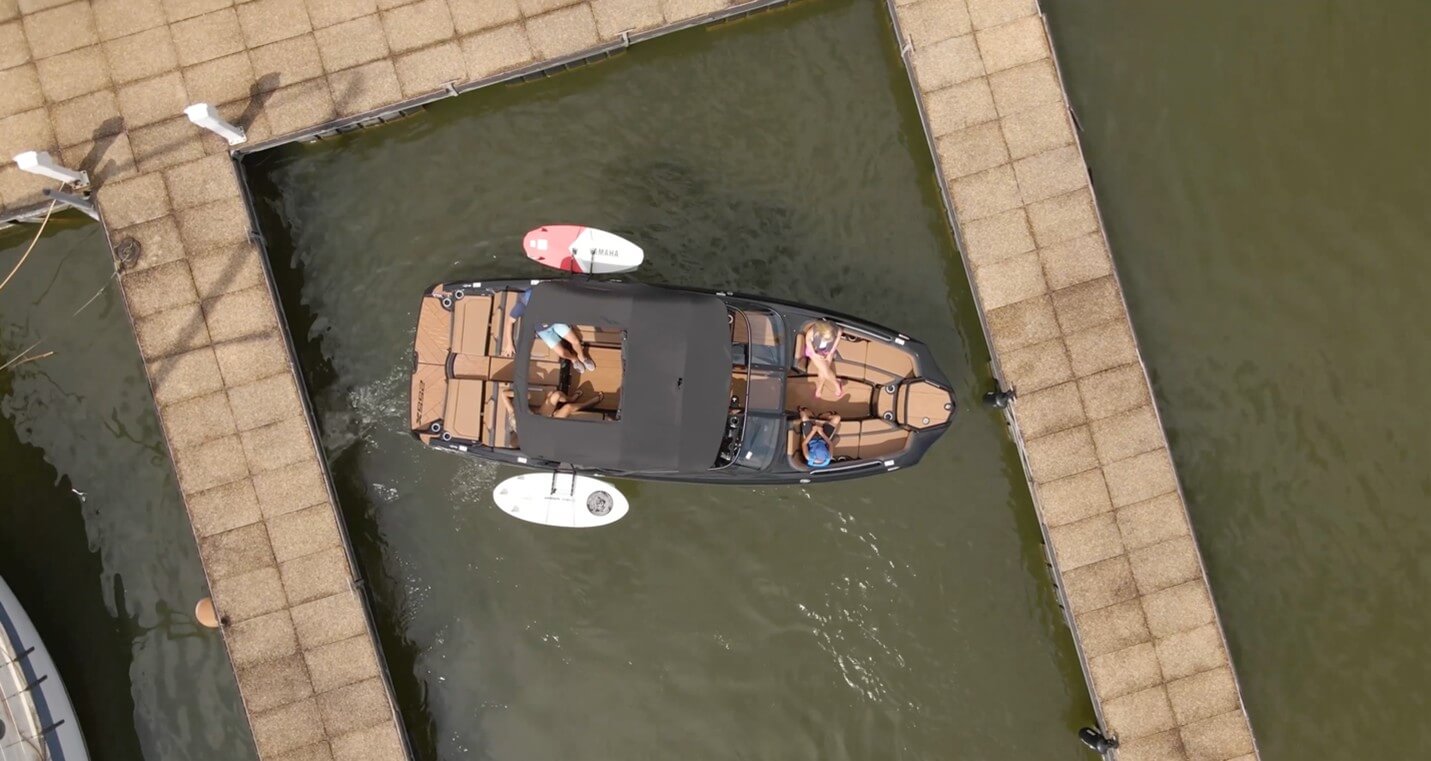
Captain Tripp engaged Drive-X mode via the steering wheel's mode button, activating paddle controls on the back of the wheel (right paddle = forward, left paddle = reverse) for close-quarters handling. He also demonstrated crab-left, crab-right, dock-hold, and pivot-turn functions while approaching a dock.
Docking approach: Brought the boat in slowly, came parallel to the dock, then engaged dock hold: "The boat's being squeezed against the dock, and it's gonna essentially stay there." He noted it wasn't strictly necessary in this instance since the boat held position well on its own with light steering input.
Departure: Engaged side thrust to move off the dock, then shifted to forward to depart — described as "pretty easy stuff."
Spin-in-Place Maneuver
Captain Tripp demonstrated two methods for spinning the boat in tight quarters:
- Split throttles (manual): Starboard engine in reverse, port engine in forward — the boat spins, though Captain Tripp noted a preferred alternative.
- Drive-X mode: Alternating forward-to-starboard/reverse-to-port inputs, resulting in the boat spinning in a very tight radius with minimal net movement. His assessment: "You don't do that in an outboard boat." He also noted generally: "This boat can do that... probably better than most outboard boats."
Related Boats
Yamaha 212XD (2021-)
2 x 1.8L Yamaha Marine Engines
Yamaha 222XD (2023-)
2 x 1.8L Yamaha HO Marine Engines