3 Critical Checks Before Buying a Boat
3 Critical Checks Before Buying a Boat
Most boat buyers focus on horsepower, features, and amenities. But after conducting thousands of sea trials, we have identified three fundamental factors that separate boats you will love from boats you will regret. These are not in the sales brochure, and your dealer probably will not point them out. Here is what our testing has taught us.
1. Engine Access: The Maintenance Reality Check

Engine accessibility can make or break your ownership experience - Photo: Greenline 58 Fly
Before you sign any paperwork, ask yourself this: Can you actually reach the engine for routine maintenance?
Too many boats come with engines buried behind panels, tucked under seats, or wedged into compartments that require contortionist skills to access. What looks sleek and spacious on the showroom floor becomes a nightmare the first time you need to check the oil, replace a belt, or diagnose an issue.
During your boat inspection, physically open the engine compartment. Can you comfortably reach the dipstick? The fuel filters? The sea strainers? If you need to remove half the interior just to check fluid levels, you are looking at higher maintenance costs and longer downtime every time something needs attention.
Professional marine mechanics will charge more to work on difficult to access engines, and some will flat out refuse the job. We have seen owners sell otherwise excellent boats simply because routine maintenance became too costly and time consuming. A few extra minutes checking engine accessibility during your pre purchase inspection can save you thousands in the long run.
2. Helm Visibility: Safety You Cannot Compromise
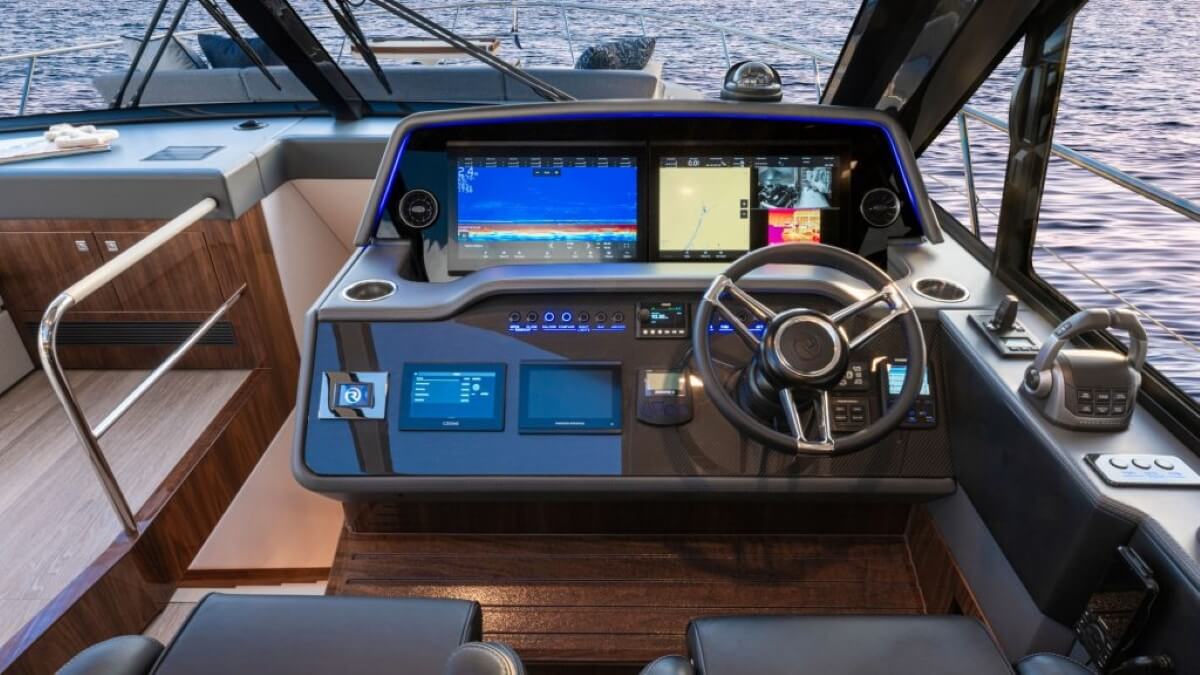
Helm visibility is critical for safe boat operation - Photo: Riviera 5600 SY Platinum Edition
Sit in the captain's chair before you buy. Not just for comfort, for visibility.
Poor helm visibility is not just inconvenient. It is dangerous. Blind spots can hide other vessels, swimmers, navigation markers, or obstacles until it is too late. And unlike a car where you can pull over, on the water you are constantly moving through an environment where visibility issues have serious consequences.
What to check: Can you see clearly in all directions without straining? Are there windshield posts or structural elements blocking critical sightlines? When docking, can you see both sides of the boat? At cruising speed, does the bow rise up and obstruct your forward view?
Pay special attention to visibility when turning. Many boats that offer decent forward visibility in calm conditions develop significant blind spots when heeled over in a turn. This is particularly important for larger vessels where the consequences of not seeing traffic are more severe.
Do not accept dealer assurances that you will get used to it. You should not have to compensate for poor design. Good helm visibility should feel natural and comprehensive from the moment you sit down.
3. Hull Design: Where the Water Meets Reality
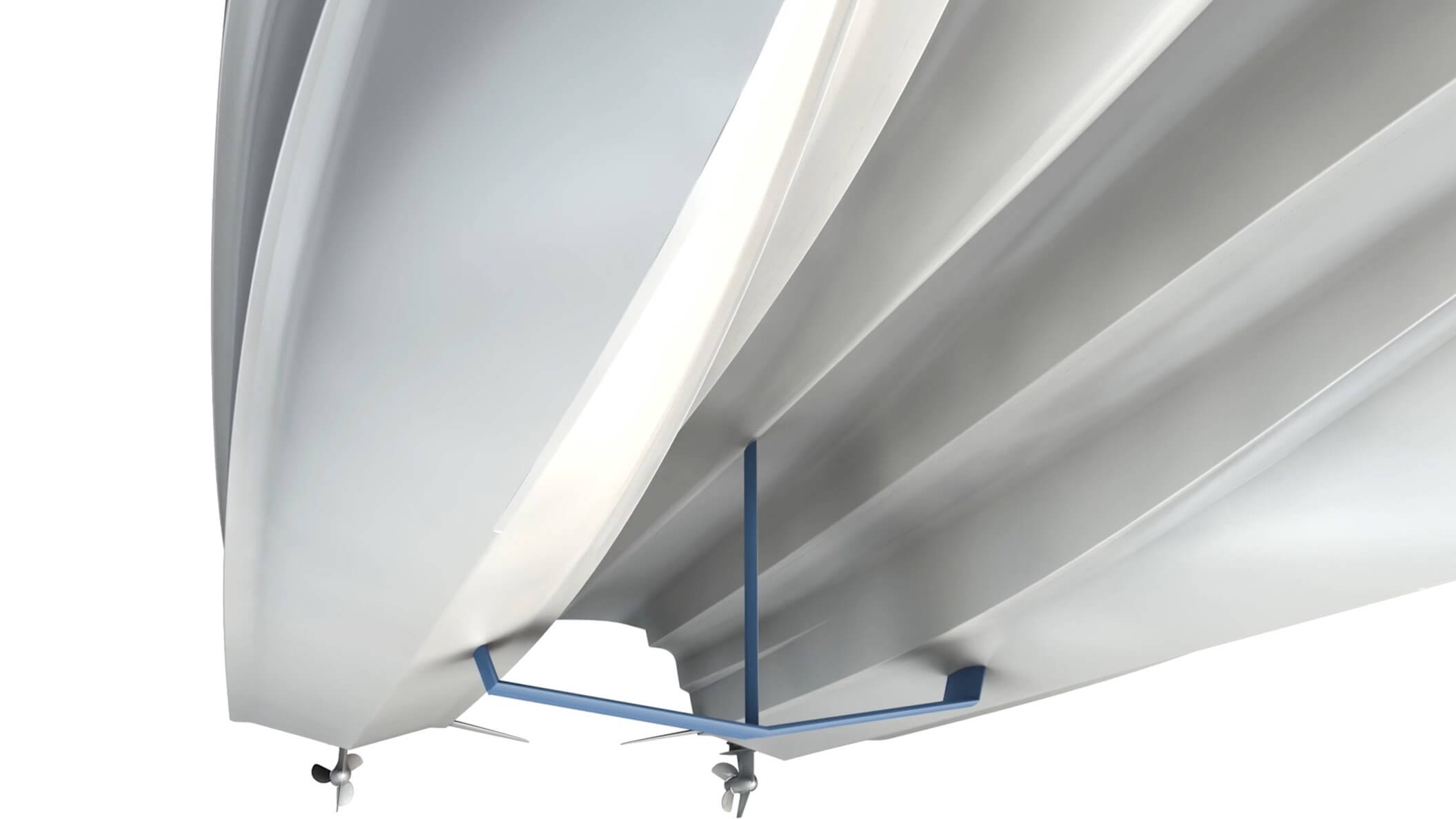
Hull design determines how your boat performs in real conditions - Photo: Aquila 46 Coupe
The hull is the most fundamental aspect of any boat, and the one thing you cannot change later. Unlike electronics that can be upgraded or seating that can be reupholstered, you are stuck with the hull design you buy.
Here is what most buyers miss: Hull design determines how your boat will actually perform in the conditions where you will be using it. A deep V hull that is perfect for offshore fishing will pound uncomfortably in the chop of an inland lake. A flat bottomed bay boat that is ideal for skinny water will beat you up in a coastal inlet.
Before falling in love with a boat, ask these questions: Where will you actually be boating, 90% of the time? What are the typical water conditions there? Does this hull design match those conditions, or are you choosing a boat based on the 10% exception?
Look at specifics: Deadrise angle affects ride quality in rough water. Chines influence stability and spray characteristics. Entry angle determines how the boat handles head seas. Transom design affects performance at various speeds and sea states.
The reality is that no hull design does everything well. The key is matching the design to your actual usage, not your aspirational usage. We have tested boats with identical specs on paper that perform completely differently on the water, and it all comes down to hull geometry.
Why These Three Matter More Than You Think
Engine access, helm visibility, and hull design share something in common: They are difficult or impossible to fix after purchase. Unlike electronics, upholstery, or even engines themselves, these are fundamental characteristics built into the boat. Getting them wrong means either living with significant compromises or selling the boat at a loss.
After thousands of sea trials, we have watched buyers overlook these fundamentals in favor of more obvious features, then struggle with the consequences for years. The boats that owners still love five years later? They got these three things right from day one.
The BoatTest Difference
This is just the beginning. Every week, we share the insights that come from extensive real world testing, the details that separate marketing claims from on water performance. Because when you are investing in a boat, you deserve information based on experience, not just specifications.
These three checks take minutes to verify during your boat inspection, but they will determine whether you are still enjoying your boat years from now, or listing it for sale in frustration.
Need help finding the right boat? Email BoatTEST. We’re here to help.